



The Wine Rules You Can Safely Ignore

Andi Healey
Web Manager
 Over the years, wine has picked up more rules than a Sunday pub quiz has categories. Serve it at this temperature. Let it breathe for this long, use this glass, fill it to this line, never add ice, never add lemonade, never admit you liked the £9 bottle more than the £40 one.
Some of these rules are genuinely worth following. A few are outdated maths rather than outdated ideas: right instinct, wrong numbers for the modern world. And a handful are just ritual that has outlived its reason, repeated so often nobody thought to check if it was still true.
I went through ten of the most-repeated ones and checked them properly, including what decanting actually does chemically, the science behind glass shape, and why "room temperature" has stopped meaning what it used to.
Here's what survived.
TL;DR
- "Room temperature" for red wine dates from a much colder world. The number isn't wrong because the wine changed. Your room did.
- "Letting wine breathe" does something, just not the way most people do it.
- The tongue-map explanation for why glass shape matters is a hundred-year-old misprint. Glass shape does matter, just for a more nose-based reason.
- Only a small fraction of wine is built to improve with age. The rest just gets older.
- Large-scale blind tastings find little positive relationship between price and enjoyment for the average drinker. If anything, cheaper wines sometimes win.
- The only rule that survives every single one of these: if you're enjoying the wine, you're doing it right.
Let's start with temperature, because between them these first two rules make the point for the whole article: temperature is a tool for getting the most out of a wine, not a colour-coded commandment to be applied regardless of what's in the glass.
1. Red wine must be served at room temperature
This rule is older than the concept of "central heating." It has a genuinely useful origin: European dining rooms before radiators, sitting at a naturally cool 15-18°C. Serve a red at that temperature and the fruit, acidity and tannin are in balance. Serve it at today's normal room temperature, 20-22°C in most centrally heated houses, and you get a warm, muddy glass where the alcohol shouts over everything else.
WSET, the wine trade's own examining body, puts the ideal range for a full-bodied red at 15-18°C too, and notes it starts to lose freshness above that.
That's almost exactly the old cellar temperature the rule was written for, it has just stopped being the temperature of anyone's actual room.
2. White wine must be served ice cold
The same idea, but the other way round. Cold mutes flavour. That's a feature for a cheap, simple white with not much going on, which is exactly why a supermarket Pinot Grigio should live in an ice bucket. It's a problem for anything with real structure. A good Chardonnay or an aged Riesling served fridge-cold tastes like a shadow of itself; give it ten minutes in the glass and all the character you paid for actually turns up.
3. You must let red wine breathe
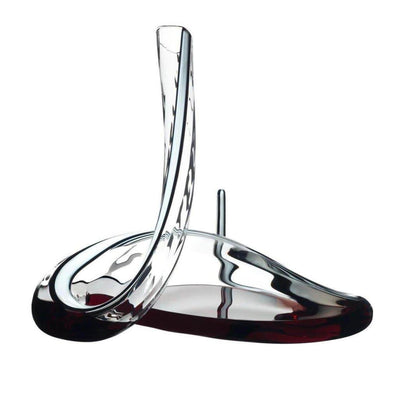
This is the one people are most confident about and most vague on the mechanics of, so here's what's actually happening. Two separate processes are lumped together under "breathing."
Evaporation starts immediately: volatile compounds, including sulfur-based ones that can smell a bit off or stale on a young wine, start leaving the glass within seconds.
Oxygen starts interacting with the wine almost immediately, but the meaningful changes generally associated with decanting can take considerably longer than the usual ten minutes with the cork out.
As I've written before, expecting a wine to "open up" by simply pulling the cork, or unscrewing the cap, is like expecting a weary air traveller to feel refreshed by simply opening the aeroplane door. You need to let it get up and stretch its legs.
So a quick swirl and a short wait can blow off an unpleasant whiff on a young, slightly eggy smelling wine. It will not meaningfully soften a tight, tannic red. That takes real decanting time, an hour or more, or a few extra years in the bottle doing the job for you.
4. Never put ice in wine
This one is younger and snobbier than most. Tinto de verano and its ice-and-lemonade cousins have been standard summer drinking across Spain for generations. And they've been doing it with sangria for centuries.
White wine spritzers are an Austrian tradition, not a modern crime.
Diluting a warm, simple wine to make it more drinkable in hot weather is not vandalism, it's what people have always done.
There's no law against it.
 5. Older wine is better wine
Age only helps wines with enough tannin, acid or sugar to act as a kind of natural preservative, and that's a small, mostly expensive, category.
As WSET puts it, "the vast majority of wines sold are actually designed for immediate consumption," either because they've already done their ageing before release or because they were never built to survive it.
The wine writer Dr. Vinny put it more bluntly: a wine cellar is not a wine hospital.
Age changes wine.
It doesn't automatically improve it.
Left in a rack for a decade, most bottles don't get more interesting, they just fade: fruit drops out, and what's left turns flat and tired rather than more complex.
6. You must use a different glass for each type of wine to direct it to the right part of the tongue.
I'm going to be straight, and slightly controversial, about this one, me being who I am.
The old explanation for why glass shape matters, that different shapes direct wine to different taste zones on your tongue, isn't correct. It comes from a distorted interpretation of a 1901 German study that never really claimed that those "sweet", "sour", and "bitter" zones existed, and it was formally debunked in 1974.
Taste receptors for the five basic tastes are distributed all across the tongue, although certain parts are more sensitive to certain tastes, there isn't a sweet spot for sweetness, or a bitter zone at the back. Anyone still telling you a glass delivers wine "to the right part of your tongue" is repeating a hundred-year-old misunderstanding. Some parts of the tongue may be able to detect a taste before the others do, so giving the brain an initial "this is sweet" message.
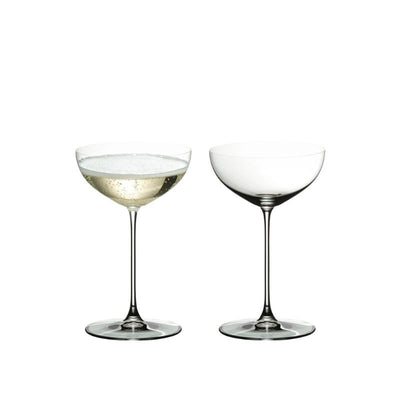
However, that doesn't mean glass shape is irrelevant, it means the real explanation is different and, frankly, more interesting. Most of what we experience as flavour is actually smell. The shape of the bowl holds aromatic compounds in the space above the wine rather than letting them scatter, or, if appropriate for the wine, allows them to disperse so as not to overpower.
This means that the optimal amount of them reach your nose rather than the ceiling. Lab analysis (gas chromatography) has shown measurable differences in aroma concentration between different glass shapes and different wines.
Also, taste buds aren't only on the tongue, but also on the soft palate at back of the roof of the mouth, and even in the epiglottis, the flap that blocks food from the windpipe. That's why it's important to have your mouth slightly open when you sniff your wine, and why swirling your sip all around your mouth gives a "fuller" appreciation of the taste.
7. Never fill a wine glass more than a third full
Unlike several rules on this list, this one is just physics. A third full leaves room to swirl without the wine ending up on your shirt, and leaves headspace above the liquid for those aromatic compounds from rule six to actually collect somewhere useful. Fill a glass to the brim and you can't swirl it, and there's nowhere for the aroma to gather before it spills out. The exact fraction isn't sacred, a third, a quarter, whatever leaves the wine room to work, the principle is what matters, not the specific line.
8. You have to taste a wine "properly" before your opinion counts
In a well-known 2001 study, oenology students were given a white wine dyed red with a flavourless dye. They described it using red-wine language, cherry, blackberry, cedar, the lot, despite it being the same white wine they'd correctly identified a week earlier. Sight overrides taste and smell that comprehensively, because the visual information arrived first, and the brain interpreted what followed accordingly.
Worth adding, in case anyone feels they need to taste "properly" to have a valid opinion: a well-known study of professional wine judges found their scores for the same wine, tasted twice in the same competition, routinely spanned a range wide enough to move a wine from bronze to gold. Trained palates aren't necessarily consistent either.
None of which means every glass needs the full ceremony. Tasting properly earns its keep when you're evaluating a wine, looking to buy it, or genuinely trying to learn something from it.
If someone just says "I don't like this", the right answer is "that's a shame, but fair enough," not a two-minute lecture about what they should be noticing.
 9. Good wine needs to be expensive
A study covering more than six thousand blind tastings found that untrained drinkers, on average, enjoyed cheaper wines very slightly more than expensive ones when they didn't know the price.
Not "no difference." A small negative correlation.
Trained tasters showed a mild positive link, which makes sense: expertise changes what you notice, not what's objectively in the glass.
This is probably the most dangerous rule on the list, not because expensive wine is never excellent, it often is, but because it quietly teaches people to distrust their own enjoyment in favour of a number on a price tag.
10. You shouldn't mix wine with anything
Spritzers, sangria, mulled wine, kalimotxo, tinto de verano: wine has been mixed with other things for about as long as wine has existed. The idea that a "proper" wine drinker never adulterates the glass is a fairly recent, fairly narrow bit of gatekeeping, mostly aimed at protecting expensive bottles from being treated the way cheap ones have always been treated.
 So which rules actually matter?
Looking back at all ten, the rules with a real reason behind them tend to survive scrutiny: leaving enough room to swirl, decanting a tannic young red, chilling reds for a modern house.
The ones that turn out to be inherited ritual rather than reasoning, no ice, no mixing, price as a proxy for pleasure, tend to fall apart the moment you ask "why."
Which is a good rule for life, not just wine, and one I've been following since I was a teenage punk rocker!
Wine has accumulated an extraordinary number of rules over the centuries. Some are useful. Some are history that never got updated. Some just survived because nobody thought to question them.
The best wine rule is probably the least complicated one: if you're enjoying the wine, you're doing it right.
Glassware built on the science,
not the sales pitch
When shape genuinely changes what you experience, the glass is worth getting right.
Riedel glasses are built around exactly that.
Quick answers
Do I really need to decant every red wine?
Sort of. It mainly helps young, tannic reds and older wines with sediment to remove, and it works properly over an hour or more, not the ten minutes most bottles get.
Is it ever actually OK to put ice in wine?
Yes, particularly with rosé or a light red in hot weather. It's standard practice across Spain and southern Europe, not a modern shortcut.
Does the shape of my wine glass really matter?
The old "tongue zone" explanation is a myth. The real reason is aroma concentration: narrower glasses hold more of the smell near your nose, and since most of what we call taste is actually smell, that's enough to change what you experience.
Does a higher price mean a better wine?
Not for most drinkers. Large blind-tasting studies have found no positive link between price and how much people enjoy a wine when they don't know what it costs.
Sources consulted: WSET, "Ideal serving temperatures and top tips for wine storage" and "Why do we age wine?"; Journal of Wine Economics (Goldstein et al., "Do More Expensive Wines Taste Better?"); Hodgson, "An Examination of Judge Reliability at a Major U.S. Wine Competition"; Brochet (2001) wine colour/expectation study, University of Bordeaux; McGill University Office for Science and Society on the 1901 Hänig tongue-map study and its 1974 correction; SevenFifty Daily and Forbes on glass-shape aroma research including Greg Hirson's UC Davis gas chromatography study; Wine Spectator ("Is it true that all wine improves with age?"); Taylors Wines on the history of the "room temperature" serving rule.


Great article. Verified things have been saying and thinking for some time, especially in terms of red wine. Love the glasses by the way, never use any others.
Leave a comment