



Wine Service - The Nine-Styles Framework

Andi Healey
Web Manager
Front-of-house training • Wine service
Nine Styles: What Every Front-of-House Professional Needs to Know About Wine
The knowledge that moves guests from "I'll just have red" to a table that's talking about the wine.
Wine can feel like an exam nobody told you was happening. This guide skips the intimidation and gives you the practical framework — nine styles, two production methods, five pairing principles — that turns confident service into confident recommendations.
Read it once, keep it nearby, and trust yourself on the floor.
The nine-styles framework: your map of the wine world
There are thousands of grape varieties, hundreds of regions, and enough obscure appellations to fill a very dull dinner party. The nine-styles framework exists precisely so you don't need to memorise all of them.
It groups every wine on a list into one of nine profiles, each shaped by the same three things: where the grapes were grown, how the winemaker intervened in the cellar, and the DNA of the grape itself. Master the nine styles and you can navigate any wine list — even bottles you've never seen before.
"Red or white?" is a starting point, not a destination. Your job is to move the conversation forward from there.
Versatility award
Medium-bodied reds are the dining room workhorse. Sitting between delicate and powerful, they're the reliable choice when a table is sharing wildly different dishes.
Most underrated
Dessert wines. Historically the most prized — and expensive — bottles in the world. Treat them as an essential conclusion to the meal, never an afterthought.
Non-negotiable
Temperature and glassware are the final act of the winemaker's work. Get them wrong and a brilliant bottle tastes ordinary.
Sparkling and light-bodied whites: the opening act
High acidity and carbonation do one specific job at the start of a meal: they clean the palate and prime it for everything to follow. Think of sparkling wine as the amuse-bouche of the drinks list.
Two methods, very different results
Carbonation isn't accidental. It's the result of a second fermentation — and where that fermentation happens changes the wine entirely.
Traditional method (méthode traditionnelle)
The standard for Champagne, Cava, Crémant, and English Sparkling. The second fermentation happens inside the bottle, creating around 90 psi of pressure — roughly three times that of a car tyre. Historically, this process was so dangerous that cellar workers wore iron masks to protect against exploding glass. They were known as cave rats, which feels like it should be a band name.
The result: complex biscuit, toast, and brioche notes from extended contact with the spent yeast. When you see the term récoltant-manipulant on a Champagne label, that's a grower producer — the same people who grew the grapes made the wine. More terroir-driven, often more interesting, usually more affordable than the big houses.
Tank method (Charmat method)
Primarily used for Prosecco. The second fermentation happens in a large sealed tank rather than the bottle. No yeast contact, no brioche notes — instead, you get fresh pear and white peach. Fruit forward, approachable, and made to be drunk young. Different from Champagne, not lesser than it.
Light whites: the thirst-quenchers
Defined by high acidity and minimal oak, these are built for warm afternoons, seafood, and tables that want to drink something genuinely refreshing.
| Variety | What it tastes like | When to recommend it |
|---|---|---|
| Sauvignon Blanc | Herbaceous to tropical, depending on origin | Seafood across the board; goat's cheese |
| Pinot Grigio | Neutral, crisp, mineral | Light starters; guests who want clean and easy |
| Grüner Veltliner | White pepper and mineral spice | Asparagus, artichoke, and other tricky vegetables |
| Albariño | Briny, saline, citrus zest | Atlantic seafood; anything with high salinity |
| Soave | Almonds, white flowers, gentle bitterness | Textured Italian starters |
The science bit
The distinctive green, grassy character in Sauvignon Blanc comes from compounds called methoxypyrazines. Cooler climates (Loire Valley) preserve them, producing cat's paw and nettle. Warmer climates (Marlborough) diminish them, letting tropical fruit take over. Same grape, completely different wine. Knowing this means you can explain why the same variety on your list tastes nothing like the one a guest had on holiday.
Full-bodied whites and aromatic styles: weight and perfume
These are the wines that convert red wine drinkers who think they don't like white wine. Richness, texture, and in some cases, extraordinary aromatics that make the glass smell better than most things in the room.
Chardonnay: the blank canvas
Chardonnay is genuinely neutral as a grape. What ends up in the glass is almost entirely the winemaker's decision, shaped by two key interventions.
Malolactic fermentation — where butter comes from
This is the conversion of sharp malic acid (think green apple) into softer lactic acid (think milk). A byproduct of this process is diacetyl — the compound responsible for that buttery quality in New World Chardonnays. Some winemakers deliberately avoid it to preserve a leaner, higher-acid profile. Chablis, in northern Burgundy, is typically unoaked and avoids malolactic fermentation. It tastes nothing like a California Chardonnay. Both are made from Chardonnay.
Oak aging — where vanilla comes from
New oak barrels add vanilla, toast, and structural tannin. The bigger and newer the barrel, the more oak influence. Older barrels contribute less flavour but allow gentle oxygen exchange, adding texture and complexity without the vanilla hit.
Aromatic whites: when the glass precedes the sip
These varieties announce themselves before you've tasted a drop. The aromatics are the point.
Riesling
Germany is the benchmark. The classification runs from light Kabinett through to the extraordinarily concentrated Trockenbeerenauslese. Aged Riesling from Mosel slate soils develops a distinct petrol note — a compound called TDN. It sounds off-putting. In context, it's remarkable.
Gewürztraminer
Lychee, rose, and spice. One of the only white wines that holds its own against complex Asian cuisine. Serve at 12°C to let the aromatics open up properly — too cold and you lose half of what makes it interesting.
Torrontés
Argentina's secret weapon. It smells intensely sweet and floral. It is bone dry on the palate. A useful tool for guests who ask for something perfumed but don't want sweetness.
Rosé and light-bodied reds: the bridge wines
These sit between the two worlds — carrying the acidity of white wine and the red-fruit character of red. Which makes them genuinely useful at tables where one person wants fish and another wants meat.
Rosé: colour tells you everything
The colour of a rosé comes from how long the grape skins stay in contact with the juice. Hours, not days. The longer the maceration, the deeper the colour and the more structure in the wine.
Provence — the global benchmark
Pale, bone dry, and delicate. Maceration of only a few hours. This is the style that redefined what rosé could be — away from sweet and pink, toward sophisticated and precise. The first choice for guests who associate rosé with quality.
Tavel — the serious one
The only French AOC dedicated solely to rosé. Deeper in colour, structured, and built to age. Worth knowing as a recommendation when someone wants rosé with substantial food — it holds up where Provence might not.
Spanish Rosado
Typically darker and more fruit-forward. A natural bridge to light reds for guests who aren't quite ready to commit.
Light-bodied reds: the ones that work with fish
Tannin is the compound that creates that drying, slightly grippy sensation on your gums — like a teabag left in too long. Light reds have very little of it. Which means they're the only reds that genuinely pair with fish without fighting the dish.
On Beaujolais — please
Beaujolais Nouveau is a marketing exercise. Cru Beaujolais is a completely different proposition. There are ten specific villages — Fleurie, Morgon, Moulin-à-Vent, Brouilly, Côte de Brouilly, Chiroubles, Chénas, Juliénas, Régnié, and Saint-Amour — producing world-class Gamay on granite soils. Know these names. They're your secret weapon when a guest dismisses Beaujolais entirely.
Medium and full-bodied reds: the main event
Medium-bodied: the dining room's best friends
These are the wines that work with the most dishes, suit the most palates, and rarely start arguments. Tannin and acidity in balance — no sharp edges.
Sangiovese
The backbone of Chianti. High acidity, savory cherry, and a firm structure. Its acidity is a chemical match for tomato-based Italian cuisine — the two were made for each other. Not just for Italian food, but that's where it sings loudest.
Grenache
Warm, spicy, and generous. The lead grape in Southern Rhône blends including Châteauneuf-du-Pape. Lower tannin than Cabernet, naturally high alcohol, and a soft, approachable character that works well with roasted meats and guests who want richness without grip.
Merlot
Softer and rounder than Cabernet Sauvignon by nature. Unfairly maligned — largely the result of a single line in a film from 2004. Worth pointing out that Pétrus, one of the world's most expensive and celebrated wines, is almost entirely Merlot.
Full-bodied: structure and staying power
Tannin here is structural, not just present. These wines are built to hold up against rich, fatty, intensely flavoured food — and to age.
Cabernet Sauvignon
The world's benchmark red grape. The 1855 Bordeaux Classification ranked its châteaux into five growths — and in 170 years, only one has changed: Mouton Rothschild was promoted from Second to First Growth. That's not a fun fact, that's a telling one.
Syrah vs Shiraz — same grape, different personality
In the Northern Rhône, as Syrah: elegant, peppery, and floral. In Australia, as Shiraz: opulent, jammy, and dark. The grape is identical. The climate, yields, and winemaking are not. Worth knowing when a guest asks for something "like Shiraz" — you can offer them the full spectrum.
Nebbiolo — don't judge it by colour
The grape of Barolo. Pale, translucent, almost brick-red — guests expect a light wine and get something with ferocious tannin and high acidity. Worth flagging before it arrives at the table. No one likes a surprise Barolo.
Malbec
Originally from France, where it plays a minor supporting role. Found its true home in the high-altitude vineyards of Mendoza, Argentina — where the intense sunlight and cool nights produce ripe, plush, dark-fruited wines with a characteristic softness.
Dessert and fortified wines: patience in a glass
These are the wines that require the most from both the vine and the winemaker. Historically they were the most sought-after bottles in the world, traded between royal courts and sold for extraordinary sums. The service of a great dessert wine is a genuine hospitality act — not a upsell.
How concentration happens
Noble rot — the beautiful mould
Botrytis cinerea is a fungus that, under very specific conditions — misty mornings followed by sunny afternoons — shrivels the grape rather than rotting it. The result is concentrated sugar and acid in a tiny amount of juice. Sauternes and Tokaji owe their existence to it.
Tokaji sweetness is measured in Puttonyos, on a scale of three to six. The rarest expression, Eszencia, is made entirely from free-run juice — it barely ferments, resulting in a wine so concentrated it reaches only 3-4% alcohol. It is essentially liquid history.
Ice wine (Eiswein)
Grapes are harvested and pressed while frozen solid — naturally, at a minimum of minus 8°C. The water is removed as ice, leaving an intensely concentrated juice with exceptional acidity and sweetness. Yields are tiny. Prices reflect this.
Fortified wines
Port
Fermentation is stopped early by adding grape spirit, preserving natural sweetness. Ruby Port is fruit-driven and approachable. Tawny is aged in small barrels on the schist slopes of the Douro — exposure to gentle oxygen develops the characteristic nutty, dried fruit complexity. Classic with Stilton. Extraordinary as a conversation at the end of the meal.
Sherry
The most misunderstood wine category in the world. It spans from bone-dry Fino and Manzanilla (extraordinary with salted almonds and jamón) through nutty Oloroso, all the way to Pedro Ximénez — a wine made from sun-dried grapes so sweet it pours like syrup. Worth having an opinion on. Most of your guests will be surprised by how good it actually is.
Temperature and glassware: the final act
A winemaker spends a year in the vineyard and months in the cellar to produce something worth drinking. Temperature and glassware are where we either honour that work or quietly undermine it. Neither takes long to get right.
Service temperatures
Room temperature means cellar temperature
"Room temperature" as a serving instruction dates from the 18th century, when rooms were much colder. A 22°C dining room served at "room temperature" is too warm — tannins harden, alcohol becomes harsh, and the fruit goes flat. 18°C is the target. Use the cellar or a brief spell in the fridge to get there.
The glassware question
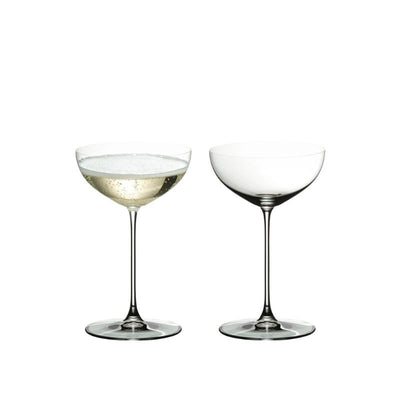
Two things to know. First: the tulip shape for sparkling wine, not the flute. The narrow flute dissipates the aromatics. The wider rim of a tulip concentrates them. The bubbles are secondary to the wine inside.
Second: full-bodied reds need a larger bowl. The surface area allows oxygen to soften tannins and release the volatile aromatics that make a complex wine interesting. Serving Barolo in a small glass is like playing an orchestra in a broom cupboard.
Food pairing logic: the five principles
Good pairing isn't instinct or tradition — it's chemistry. These five principles will explain every successful combination you've ever tasted, and help you improvise confidently when a guest asks for something specific.
- Acidity alignment. High-acid food requires high-acid wine — otherwise the wine tastes flat by comparison. Tomato sauce with Sangiovese. Lemon-dressed fish with Riesling. The acid in each amplifies rather than fights.
- Tannin meets protein. In the classic Cabernet and ribeye combination, the wine's tannin cuts through the fat while the fat chemically softens the perception of the tannin. They do each other a service. This is why tannic reds feel harsh without food and transformed with it.
- Sweet and salty contrast. Sauternes with Roquefort, Port with Stilton. Salt heightens the perception of the wine's fruit and sweetness. The contrast makes both more interesting than either would be alone.
- Aromatic matching. Match the intensity of the perfume. Gewürztraminer is one of the few wines that can hold its own against the complex spice of Thai or Vietnamese cuisine — because the wine is equally expressive. A delicate Pinot Grigio gets lost; the Gewürztraminer meets it head on.
- Texture matching. Use the peppery, high-acid profile of Grüner Veltliner to navigate difficult vegetables — asparagus, artichoke — that make other wines taste metallic or flat. The wine's specific character is the solution.
Your education is ongoing. Every bottle you taste is data. Keep notes. Back your own judgement. The floor is where all of this becomes real.


Leave a comment