



How to Look After Premium Glassware

Andi Healey
Web Manager
Hospitality trade • Glassware operations
How to look after premium glassware: the complete maintenance guide for hospitality operations
Machine settings, hand-washing technique, polishing protocol, decanter care, and how to tell clouding from corrosion before it becomes irreversible.
Most Riedel glassware is rated for over 1,000 dishwasher cycles without loss of clarity, provided specific mechanical and chemical conditions are met. The conditions are not demanding, but deviating from them produces cumulative damage that compounds over time and eventually cannot be reversed. Glass corrosion, once established, is permanent.
This guide covers the full maintenance cycle: pre-wash handling, machine parameters, hand-washing technique, polishing without breaking stems, decanter maintenance, cloth care, and how to distinguish treatable cloudiness from structural corrosion.
Pre-wash handling
The maintenance cycle begins at the table, not at the sink. Red wine contains acids that attack the glass surface if allowed to dry. The longer residues remain in contact with the glass, the more difficult they become to remove and the more structural damage accumulates.
Four non-negotiable steps apply the moment a glass leaves a table.
- Rinse with clear water immediately. This neutralises wine acids before they bond to the surface. It takes seconds and prevents the primary cause of long-term glass degradation.
- Identify hand-wash-only items and route them away from the dishwasher immediately. If a glass is labelled "hand wash only" or came without dishwasher instructions, it does not go in the machine. No exceptions.
- Pre-rinse glasses that held fruit juices or heavily stained red wine by hand before machine entry. Fruit acids are particularly aggressive on glass.
- Do not use standard cotton tea towels at any stage of the process. They damage glass surfaces and fail basic hygiene standards. Microfibre only.
Machine washing
Automated washing is safe for most Riedel glassware provided the machine is correctly set up and loaded. The parameters below are not suggestions: deviating from them produces the cumulative surface damage that eventually becomes irreversible corrosion.
| Variable | Requirement | Why it matters |
|---|---|---|
| Water hardness | Approximately 3-4° German hardness (°dH) | Extremely soft water attacks the glass structure directly. Hard water causes limescale. The narrow target range avoids both. |
| Dishwasher salt | Keep topped up consistently | The softening system cannot function without it. Salt level directly affects detergent performance and final glass clarity. |
| Temperature | 50-55°C; use glassware or low-temperature programme | Higher temperatures accelerate chemical reactions that cause corrosion and increase thermal stress across the glass structure. |
| Detergent and rinse aid | Dose precisely; do not overdose either | Overdosing detergent causes chemical etching. Insufficient rinse aid leaves water spots and prevents clean sheeting. |
| Post-cycle door | Open immediately when cycle ends | Trapped steam attacks the glass surface. Prolonged exposure is a leading cause of corrosion in otherwise well-maintained machines. |
Loading
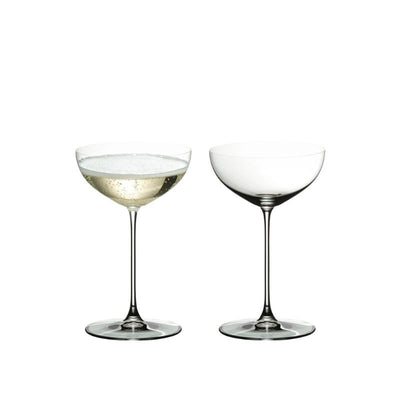
Use the top rack wherever possible. Secure glasses in stemware holders to prevent movement. No glass should touch another glass, a metal utensil, or the spray arms at any point during the cycle. If a glass cannot be loaded with proper clearance, hand-wash it instead.
Two prohibitions worth enforcing strictly
Never wash glassware alongside aluminium items: garlic presses, pots with aluminium handles, or any aluminium kitchen equipment. The chemical reaction between aluminium and the wash cycle causes rapid, irreversible glass corrosion. A single cycle with aluminium contact can damage glasses that have survived hundreds of clean cycles.
Run a monthly maintenance cycle on an empty machine: one cup of distilled vinegar in a bowl on the bottom rack. Clear the filter and spray arms and wipe down the door seals. A machine that is not maintained cannot maintain glassware properly.
Hand-washing technique
Hand-washing is appropriate for items labelled hand-wash-only, for decanters, and for any glass too tall or fragile for machine washing. The technique is straightforward but a few specifics matter.
Use warm water with washing liquid. Never boiling or near-boiling water: thermal shock causes immediate structural failure. Hold the glass by the bowl while washing, not by the stem. Holding by the stem while applying any lateral force is the primary cause of stem snapping during hand-washing.
For rinsing, a splash of white vinegar in the warm rinse water improves clarity and reduces water spots. It is a simple step that produces a measurable difference in the final finish.
Air-dry rinsed glasses upside down on a drying mat. Do not dry on metal racks, which damage the rim. Do not store glasses inverted on metal surfaces for the same reason.
On storage
Glass is porous and absorbs environmental odours. Do not store glasses in proximity to strong-smelling items: spices, cleaning chemicals, or heavily aromatic kitchen ingredients. A glass stored near a spice rack for a week will carry those aromas into service. Store upright, away from odour sources, with adequate clearance between items.
Polishing without breakage
Polishing is the stage at which most breakages occur. The cause is almost always the same: a twisting force applied to the stem while both the base and the bowl are held simultaneously. The stem is the weakest structural point of any wine glass and will not survive torque. One rule prevents the majority of polishing breakages.
Never hold the base and the bowl at the same time. Polish each part of the glass independently, with one hand providing a stable anchor and the other doing the work.
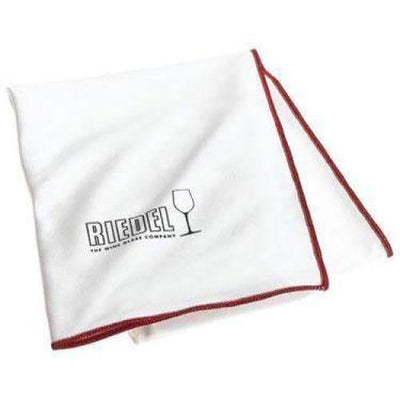
Use two large microfibre cloths simultaneously. One anchors; one polishes. This also prevents the polishing cloth from re-depositing fingerprints onto surfaces already cleaned.
Step-by-step method
- Bowl: Cradle the bowl in one cloth-protected hand. Use the second cloth to polish the interior and exterior. Do not force a hand inside the bowl. Place the cloth loosely inside and rotate it gently, letting the cloth do the work rather than applying pressure to the walls.
- Base: Hold the base plate firmly in one cloth. Polish it independently with the second cloth. The base and the bowl are never held simultaneously.
- Stem: Hold by the base to polish the stem. Apply no lateral pressure.
- Final check: Hold the finished glass against a strong light source. Zero streaks, smudges, or water spots. Rim smooth and residue-free.
Decanter maintenance
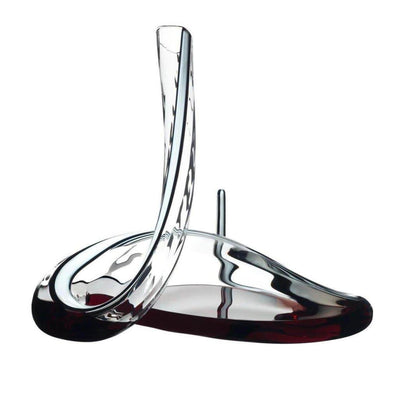
Most Riedel decanters require hand-washing. Their geometry makes interior access difficult, and soaps or detergents inside a decanter are nearly impossible to remove completely: residual detergent will contaminate the next wine poured into it. No soap inside decanters. Ever.
Standard cleaning cycle
- Rinse with clear water immediately after use. Red wine acids need neutralising before they bond to the interior surface.
- For stained interiors, fill with warm water and leave overnight. This loosens residues that an immediate rinse cannot shift.
- Empty and swirl approximately half a litre of distilled water throughout the interior. Distilled water eliminates the mineral spots that tap water leaves behind.
- For stubborn stains, use cleaning beads with warm water poured through a funnel. Swirl for two minutes, drain through a sieve, and dry the beads for reuse. Specialist cleaning tabs are an alternative for particularly persistent staining.
Tap clearance
Impact between the decanter spout and the tap is the leading cause of decanter chipping. Maintain clearance when rinsing. If the sink is too small to allow safe rinsing without contact risk, use a bathtub or shower instead. A chipped decanter spout is a service hazard as well as a loss of a capital asset.
Polishing cloth care
A contaminated polishing cloth transfers oils, bacteria, and residues back onto the glass it is supposed to clean. The polishing stage produces no benefit if the tools are not maintained correctly.
Wash microfibre cloths at a minimum of 60°C, up to 75°C, with an odourless detergent. Scented detergents transfer fragrance to the cloth and from the cloth to the glass, introducing aromatic contamination into the service environment. Do not use fabric softener: it leaves a greasy film on the fibres that transfers directly to glass surfaces. Air dry only. Tumble drying degrades microfibre and reduces its effectiveness.
Replace cloths regularly. A cloth that has been used for hundreds of polishing cycles and washed dozens of times accumulates residues that washing cannot fully remove. Build cloth replacement into the maintenance budget rather than treating it as an unplanned cost.
Clouding vs. corrosion
Clouding has two distinct causes that require different responses. Identifying which one you are looking at before attempting remediation is the critical step: applying acid to genuine corrosion will not improve it and may accelerate the damage.
| Feature | Limescale or detergent residue | Glass corrosion |
|---|---|---|
| Appearance | Cloudy surface, white spots, visible smudges that sit on top of the glass | A white haze or coating that appears to be part of the glass itself, not sitting on the surface |
| Cause | Mineral deposits from hard water, or soap and rinse aid residue from overdosing or poor rinsing | Chemical leaching caused by soft water, excessive heat, or prolonged exposure to trapped steam |
| Test | Apply a small amount of white vinegar or diluted citric acid to the affected area | If the vinegar test produces no improvement, the damage is structural |
| Remediation | Reversible: soak briefly in a mild acid solution (white vinegar or citric acid) and rinse thoroughly | Irreversible: permanent structural change; the glass cannot be restored |
Prevention is the only viable strategy for corrosion. The three parameters that matter are water hardness maintained at 3-4°dH, dishwasher temperature held at 50-55°C, and the machine door opened immediately after every cycle. All three are simple to maintain. None of them can reverse damage once it has occurred.
A glass that reaches the table clouded or damaged reflects on the operation before the wine has been poured. The maintenance cycle is the standard that makes everything else possible.


Leave a comment