



The Riedel Shop Summer Pairing Guide

Andi Healey
Web Manager

Summer Guide — July 2025
The Riedel Shop Summer Pairing Guide: What to Drink, and What to Drink It From
Garden parties, Wimbledon afternoons, long evenings that refuse to get dark. Summer eating and drinking has its own rules - lighter, more spontaneous, more fruit-forward. This is the guide to matching the season's best food and drink to the right wine and (of course) the right Riedel glass.
TL;DR
- English sparkling wine is the defining drink of the British summer table, and it deserves a proper bowl, not a flute.
- Rosé is the most versatile summer wine, but make sure you choose a dry one and serve it cold enough.
- Strawberries, stone fruit, and herb-led dishes all have natural wine pairings that are straightforward once you know the logic.
- Glass shape affects temperature, aromatics, and how long a wine stays at its best - all of which matter more in warm weather than at any other time of year.
The British summer table
British summer eating does not look like Italian or French summer eating (yet!).
It is not built around long lunches in the shade with a carafe of local wine. It is built around seizing the moment: a warm Saturday that demands a garden party put together at 24 hours' notice, a Wimbledon afternoon with the radio and something cold in a glass, a dinner party where the doors open onto the garden and the meal drifts from inside to out.
The food is lighter and more fruit-forward than any other season. Strawberries at their peak. Salads with herbs and stone fruit. Fish and seafood. Grilled things. Easy desserts that don't require the kitchen to be warm for very long. The wine logic follows: more acidity, more freshness, lower alcohol, and a pronounced preference for cold.
The glass matters more in summer than in any other season, for two reasons. First, warm weather accelerates warming in the glass, and a well-designed Riedel glass - shaped for the wine inside it - held by the stem, keeps its cool temperature more effectively than a generic tumbler. Second, summer wines tend to be aromatic wines, and aromatic wines are the most sensitive to bowl shape: the difference between a Sauvignon Blanc in the right glass and the same wine in one that's too large is more noticeable than the equivalent test with a tannic Cabernet.
Sparkling wine: the season's centrepiece
If there is one category of wine that belongs to the British summer more than any other, it is sparkling wine - and specifically, English sparkling wine. If you read last week's article then you know that the past decade has transformed what is produced in Kent, Sussex, Hampshire, and beyond. The best examples, made from the same three grape varieties as Champagne by the same traditional method, now sit credibly at the highest level. More relevant to the summer table, they carry a freshness, a green apple brightness, and a summer fruit character that no imported equivalent quite replicates.
The strawberry and cream notes that good English sparkling wines carry - drawn from the Pinot Noir grapes in the blend - echo the fruit of the season in a way that genuinely enhances both wine and food. The tragedy is that this wine is almost universally served in a narrow flute, which concentrates the bubbles but suppresses the aromatics.
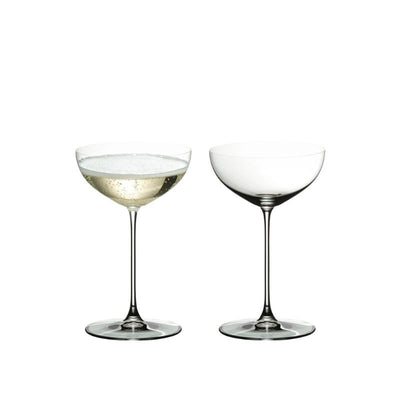
The Riedel Veloce English Sparkling Wine Glass is the right vessel. Its wider bowl allows the full aromatic range to open - the brioche, the green apple, the faint red fruit - while the tapered rim focuses the nose and preserves the effervescence. On a warm afternoon, the difference between this glass and a standard flute is remarkable.
For Champagne, the same glass works for non-vintage and young bottles. For older, more complex examples where the bubbles have softened and the aromatic development is the point, the Riedel Veritas Champagne Wine Glass - with a slightly wider bowl - allows full maturity to express itself.
What to look for in English sparkling wine
The category has expanded quickly, and the quality varies. For summer drinking, look for wines from producers with established vineyard sites rather than bought-in fruit, and for a vintage date on the label, which generally indicates more complexity and more time on the lees. Prices reflect the cost of production: a good English sparkling wine costs more than entry-level Prosecco because it requires more time, more skill, and more expensive raw materials. But it is worth it.
Rosé: how to drink it properly
Rosé is the wine most associated with summer, and also the wine most casually dismissed by people who should know better. The dismissal is almost always based on experience of the wrong kind: too sweet, too anonymous, served too warm in a thick-walled tumbler. Good rosé is another thing all together.
Dry Provençal rosé -- from the Cotes de Provence appellation, made from Grenache, Cinsault, and Syrah - is a serious wine. Its pale salmon colour comes from minimal skin contact. It carries delicate strawberry and herb notes with a bone-dry finish and enough acidity to work across a broad range of summer food: fish, seafood, salads with tomatoes and herbs, charcuterie, lighter grilled meats. It is the single most versatile wine for outdoor summer eating.
Two things are routinely done wrong with rosé. The first is temperature: it should be served colder than most white wines, at 8 to 10 degrees, because its delicate aromatics are more stable at low temperature and the freshness is the entire point. The second is the glass. The Riedel Veloce Rosé Glass has a tapered bowl that preserves temperature and concentrates the delicate fruit and floral notes. In this glass, at the right temperature, a quality Provençal rosé is a genuinely wonderful experience.
Summer rosé at a glance
Provençal rosé (Cotes de Provence, Bandol): dry, pale, herb-and-strawberry. The benchmark. Works with almost all summer food.
Sparkling rosé (English, Champagne, or Cava): the celebratory step up; particularly good with strawberry desserts and fruit-forward summer puddings.
Loire rosé (Sancerre rosé, Rosé d'Anjou): slightly more fruit-forward, well suited to lighter salads and herb-led dishes.
All three: serve at 8 to 10°C in the Riedel Veloce Rosé Glass. Rechill between pours rather than letting the bottle warm on the table.

White wines for summer food
The summer table calls for white wines with freshness and purpose. This is not the season for heavily oaked Chardonnay or wines that need 20 minutes in the glass to show themselves. It is the season for wines that are immediately expressive, food-friendly, and alive with acidity.
Sauvignon Blanc
The most obvious summer white.
Marlborough Sauvignon Blanc - vivid, grapefruit-and-passionfruit, with a herbal edge - is the obvious match for seafood, salads, and goat's cheese. A Sancerre or Pouilly-Fumé from the Loire offers a more mineral, restrained version of the same variety that suits more considered summer dishes: a fine piece of fish, a light tart, asparagus with vinaigrette.
Riedel Sauvignon Blanc Glasses have a taller bowl and narrower opening, keeps the aromatics focused and the temperature stable as the glass warms.
Riesling
Consistently underrated for summer, and one of the most food-friendly wines produced anywhere. A dry German Riesling Spätlese, an Alsatian Riesling, or a Clare Valley dry Riesling from Australia all bring an electric combination of citrus, stone fruit, and mineral acidity that works beautifully with grilled fish, Asian-influenced summer dishes, and stone fruit.
The Riedel Riesling / Zinfandel Glass is designed to capture Riesling's aromatic range and direct the wine to the front of the palate where its acidity reads as refreshing rather than sharp.
Grüner Veltliner
Austria's great contribution to the summer table. Dry, with a distinctive white pepper and herb character, Grüner Veltliner handles green vegetables - asparagus, courgette, bitter salad leaves - better than almost any other grape variety. It is also one of the more practical options for mixed outdoor eating where a single white wine needs to cover several dishes at once.
Light reds and warm evenings
The instinct to abandon red wine in summer is understandable but unnecessary. The key is to think lighter: lower tannin, more fruit, and - crucially - served colder than most people imagine.
A Pinot Noir from Burgundy, New Zealand, or Germany, served at 14 to 15 degrees rather than room temperature, is one of the most elegant summer wines available. Its cherry and strawberry notes, low tannin, and bright acidity make it at home alongside grilled salmon, a herb-led salad, a cheese board at the end of a garden dinner, or summer berry desserts. The Riedel Pinot Noir Glass, with its wide open bowl, allows the delicate aromatics to gather before the wine reaches the palate. Pinot Noir is more sensitive to glass shape than almost any other variety; the bowl makes a real and noticeable difference.
Gamay from Beaujolais is a very underrated summer red. Served lightly chilled at around 13 degrees and it delivers fresh raspberry and violet with enough substance to accompany food without ever feeling heavy. It is also considerably more affordable than Burgundy, which makes it the sensible choice for outdoor occasions where the wine needs to flow freely without anxiety about the bottle count.
Strawberries and summer fruit
Fresh strawberries at their July peak are one of the great pleasures of the British summer, and they have a wine affinity that most people overlook in favour of cream alone.
The best match for fresh strawberries is, of course, English sparkling wine or Champagne. The acidity cuts through the sweetness of the fruit, the bubbles lift the aromatics, and the Pinot Noir in the blend often carries a strawberry note of its own that mirrors what is on the plate.
For strawberry desserts involving cream, pastry, or both - a summer tart, a pavlova, a fresh berry pudding - a sparkling rosé adds a dimension the white versions don't. Skin contact gives the wine its own red fruit note, which makes the pairing feel cohesive rather than coincidental.
For peaches, nectarines, and apricots - fresh, grilled, or in a tart - a late harvest Riesling or a Vouvray demi-sec (off-dry Chenin Blanc from the Loire) is the natural match: it amplifies the stone fruit's perfume while cutting its sweetness with acidity.
A Moscato d'Asti is the lighter option for afternoon rather than evening: barely alcoholic, gently sparkling, intensely floral.
If your summer table includes chocolate alongside the fruit -- dipped strawberries, a ganache tart - the one thing worth knowing is that dry wine will taste wrong with dark chocolate regardless of how good it is. The answer is a small glass of Tawny Port or a Banyuls from Roussillon served in the Riedel Vinum Port Glass: sweet enough to work with the chocolate, complex enough to be interesting. For chocolate combined with summer fruit, Brachetto d'Acqui - lightly sparkling and bursting with strawberry and rose - is the more summery alternative.
To be honest, when the third heatwave of the summer hits, you don't want to overthink it. Just make sure you cover the basics.
Cold. Sparkling. Outside... Simple
Quick reference table
| Food / occasion | Wine style | Riedel glass | Serve at |
|---|---|---|---|
| Fresh strawberries | English sparkling wine or Champagne | Champagne Wine / ESW Glass | 7–9°C |
| Strawberry desserts and summer puddings | Sparkling rosé or Champagne rosé | Rosé Glass | 7–9°C |
| Peaches, nectarines, stone fruit | Late harvest Riesling or Moscato d'Asti | Riesling / Zinfandel Glass | 8–10°C |
| Seafood, grilled fish, green salads | Sauvignon Blanc or dry Riesling | Sauvignon Blanc Glass | 8–10°C |
| Garden party, mixed summer food | Provençal rosé | Rosé Glass | 8–10°C |
| Grilled meats, herb dishes, cheese | Pinot Noir or chilled Gamay | Pinot Noir Glass | 13–15°C |
| Chocolate with summer fruit | Banyuls, Tawny Port, or Brachetto d'Acqui | Port Glass | 10–14°C |
Frequently asked questions
What is the best wine for a Wimbledon garden party?
English sparkling wine is the obvious and correct answer - partly for the occasion, partly because a good example genuinely suits the food. The Pinot Noir in the blend gives many English sparkling wines a strawberry and cream note that mirrors the classic Wimbledon accompaniment, and the acidity keeps everything feeling fresh across an afternoon.
If you are serving a crowd and need something more affordable, a quality Cava or a Crémant d'Alsace are both better options than most entry-level Prosecco. Whatever you choose, serve it in a Riedel Champagne Wine or ESW Glass rather than a narrow flute: the wider bowl means the wine is actually tasted rather than just swallowed cold.
Should I serve rosé at a summer dinner party?
Yes, provided you choose the right one and serve it correctly. A quality Provençal rosé is a serious food wine that works across a wider range of summer dishes than most whites, and it is the most socially inclusive option: it suits both white wine and light red wine drinkers, which makes it genuinely useful at a table where you are not sure of everyone's preference.
Choose a dry style (check the label or look at residual sugar if listed), serve it at 8 to 10 degrees, and use a Riedel Rosé glass. Rechill between pours -- rosé warms quickly in summer and loses its appeal fast once it does.
Can I drink red wine in summer?
Yes - the key is lighter styles served cooler. A Pinot Noir or a Gamay from Beaujolais, served at 14 to 15 degrees rather than room temperature, is genuinely summery: lower tannin, brighter fruit, and enough acidity to work with food rather than overwhelm it.
What doesn't work is reaching for the same heavy reds you'd drink in January. A full-bodied Cabernet Sauvignon or a high-alcohol Amarone on a warm July evening is uncomfortable for everyone. Summer is the season for Pinot, Gamay, lighter Grenache, and anything with good acidity and moderate alcohol.
What wine works best with a summer cheese board?
The honest answer is that a single wine rarely covers a mixed cheese board perfectly. For summer, the most versatile approach is a light unoaked white - Sauvignon Blanc, dry Riesling, or Grüner Veltliner - which handles fresh and soft cheeses well without clashing with harder ones.
If you want a red, a lightly chilled Gamay is the most cheese-friendly summer option: its acidity works where most reds' tannins don't. And if the board includes blue cheese, consider a small glass of Sauternes or late harvest Riesling alongside it: the sweetness of the wine and the salt of the cheese is one of the most reliable pairings in the whole of food and wine.
What should I serve at an outdoor birthday dinner?
Open with English sparkling wine or a quality Crémant - it sets the tone and works with almost any canapé. Move to a dry Provençal rosé or a Sauvignon Blanc through the main course, depending on what you're serving. For a fish or seafood main, the Sauvignon Blanc. For anything with more weight - grilled meat, a summer tart, a herb-roasted chicken - the rosé covers more ground.
For dessert, if you are serving fresh fruit or a berry pavlova, bring back the sparkling wine or open a sparkling rosé.
The right glass for every summer occasion
The Riedel ranges cover every wine style in this guide. Use our glass finder to match your wine to the right glass.
Glass Finder Tool


Hi Neil
Thank you very much, always nice to be appreciated.
I have to admit that I’m not very adventurous when it comes to sweet or dessert wines (I blame being introduced to, and loving, Port at a very young age).
I’ll have to do some research and see if I can come up with a piece to do it justice.
Salut!
Andi
I’m loving all your emails: I keep a lot of them for reference. One wine – greatly overlooked in my opinion – is Recioto Delia Valpolicella: really undercooked, and great match to most summer desserts
Leave a comment