



The Pirate, the Count, and the Showgirl: Why Cocktail History Is Mostly Fiction.

Andi Healey
Web Manager
The Summer Cocktail Myths Everyone Repeats

TL;DR: The Mojito wasn't invented by pirates, the G&T wasn't really medicinal, nobody can agree who invented the Margarita, the Negroni's origin story has a serious rival claim, the Aperol Spritz is less “ancient Italian tradition” and more “very good marketing from 2003,” and the man who gets credit for the Bloody Mary admitted it wasn't entirely his idea.
Ask anyone how their favourite summer cocktail came to exist and they'll probably tell you with total confidence, depending on what's in their glass:
- A pirate cured scurvy with rum,
- Soldiers disguised medicine with gin,
- A bartender named a drink after a showgirl who could only drink tequila,
- An Italian aristocrat wanted a drink with a bit more “oomph.”
These stories get repeated so often, on menus, in articles, by bartenders themselves, that nobody stops to check whether they're true, or not.
Most of them aren't, or can't be proven. Cocktail history is full of gaps, and marketing departments (or bartenders looking for a good tip) have never been shy about filling them in. Here are six of the most repeated summer cocktail origin stories, and what actually stands up to a bit of research, plus how to make each one properly.
The Mojito wasn't invented by pirates
Here's the version you've probably heard: Sir Francis Drake, marauding around the Cuba in 1586, had a crew going down with scurvy. In a stroke of nautical ingenuity, he mixed rum, lime, mint and sugar, cured the lot of them, and the drink got christened “El Draque” in his honour. Cool story. Great name for a cocktail. Almost certainly nonsense.
There isn't a single document placing Drake anywhere near a mojito, or even confirming he set foot in Cuba at all. What we do know is that the ingredients, aguardiente, lime, mint, sugar cane, were already being combined by Cubans, quite possibly by enslaved people working the sugar plantations, well before any English privateer showed up to take credit for it. The name “Mojito” itself doesn't appear until Bacardi got involved over 300 years later and started using it in their advertising.
So why does the pirate keep getting the credit? Because “swashbuckling naval hero invents a cure for scurvy” is a much better story to tell over a bar than “the actual origin involves slave labour on a Cuban sugar plantation and we're honestly not sure of how the name came about.” One of these fits neatly on a cocktail menu. The other one is the truth.
Not invented by pirates
Mojito

Ingredients
- 50ml white rum
- Half a lime, cut into wedges
- 8–10 fresh mint leaves
- 2 tsp caster sugar (or 15ml sugar syrup)
- Soda water, to top up
- Crushed ice
Method
- Muddle the lime wedges, sugar and mint gently in the base of a glass.
- Fill with crushed ice.
- Pour over the rum and stir well.
- Top with soda water and stir once more.
- Garnish with a mint sprig.
The gin and tonic was never really medicine
This one's persistent because it sounds so plausible: British officers stationed in colonial India, forced to choke down bitter daily doses of quinine to fend off malaria, started mixing it with gin and soda to make it bearable. Practical, resourceful, very stiff-upper-lip. The G&T as essential medicine.
The trouble is there's no actual record of this happening the way the story claims, and quinine at the time was usually dosed in wine rather than fizzy water. Tonic water as a product didn't properly exist yet when the “1825, Indian Army” version of events is supposed to have taken place. And even if it had: modern tonic water contains roughly a tenth of the quinine dose you'd need for it to do anything meaningful against malaria. You could drink G&Ts until you fell off your bar stool and you still wouldn't be protected.
The story survives because it turns a fairly ordinary bittering agent into a tale of colonial resourcefulness, which is a far more compelling pitch than “it's in there because it tastes good.”
Never really medicine
Gin and Tonic

Ingredients
- 50ml gin
- 150ml tonic water, chilled
- Plenty of ice
- Garnish to suit the gin's botanicals (lime, orange, cucumber, or rosemary)
Method
- Fill a large glass generously with ice.
- Pour over the gin.
- Top slowly with tonic water to preserve the fizz.
- Stir once, gently.
- Add your garnish.
 Nobody actually knows who invented the Margarita
Ask five different “people who know” who invented the Margarita and you'll get five different answers, each with a name, a date and a suspiciously specific anecdote. A Tijuana bartender made it for a showgirl who was allergic to every spirit except tequila. A Ciudad Juárez bartender invented it by accident when a customer ordered something he didn't know how to make. A Texan socialite mixed it at her own Christmas party in Acapulco in 1948. All three stories are still repeated as fact, sometimes on the same website.
None of them can be verified, and several directly contradict each other on timing. What's better documented is that the Margarita almost certainly evolved from the “Daisy” family of cocktails (margarita is Spanish for daisy). Sour cocktails, where a base spirit, citrus juice and a liqueur are mixed, had been knocking around since the 1800s. The exact recipe, called the “Picador,” appeared in William J. “Billy” Tarling's 1937 Café Royal Cocktail Book, sixteen years before the first written reference to a Margarita.
What genuinely catapulted the drink's fortunes wasn't any of the origin stories at all, it was a Dallas restaurateur adapting a soft-serve ice cream machine in 1971 to make the “frozen” version, and Jimmy Buffett releasing his hit song “Margaritaville” in 1977.
The myth persists because half a dozen bars still trade on being “the birthplace of the Margarita,” and a glamorous woman with an allergy makes a better anecdote than a 19th-century sour cocktail nobody's heard of.
Nobody agrees who invented it
Margarita

Ingredients
- 50ml tequila
- 25ml orange liqueur (such as Cointreau)
- 25ml fresh lime juice
- Salt, for the rim
- Ice
Method
- Run a lime wedge round the rim of the glass and dip in salt.
- Shake the tequila, orange liqueur and lime juice hard with ice.
- Strain into the prepared glass, over fresh ice or straight up.
- Garnish with a lime wheel.
The Negroni's origin story has a rival nobody mentions
Florence, 1919. Count Camillo Negroni, a regular at Caffè Casoni, asked his bartender to give his usual Americano (Campari, sweet vermouth and soda water) a bit more backbone. The bartender swapped the soda for gin, added an orange peel instead of lemon, and a legend was born. This is the version on virtually every Negroni-branded coaster in existence.
It's also the best-supported of the six stories on this list, credit where it's due, backed by oral history from the bartender's own family and by cocktail historians who've actually gone digging. But it's not uncontested. Descendants of a French general claim he was mixing a near-identical drink in Senegal decades earlier, and have letters to prove it. There's also genuine doubt over whether Camillo Negroni was actually a Count at all. And, rather inconveniently, the Boulevardier, essentially the same cocktail with bourbon instead of gin, was documented in print two years before the Negroni supposedly came into existence.
The tidy Florence story sticks around because “eccentric Italian nobleman wants a stronger drink” is simply a better anecdote than “someone in Senegal was already making this,” or “the barman ran out of bourbon so used gin instead.”
Has a rival nobody mentions
Negroni

Ingredients
- 25ml gin
- 25ml Campari
- 25ml sweet vermouth
- Orange peel, to garnish
- Ice
Method
- Add all three spirits to a mixing glass with ice.
- Stir, don't shake, until well chilled.
- Strain into a rocks glass over fresh ice.
- Express the orange peel over the glass and drop in.
The Aperol Spritz isn't the ancient tradition it's sold as
This is the one that'll probably surprise people the most. The Aperol Spritz gets treated like it's been a fixture of Italian summers since time immemorial, all sun-drenched piazzas and generations of nonnas in black dresses. The spritz habit itself is genuinely old, Austro-Hungarian soldiers in the Veneto were watering down local wine back in the 1800s. But the orange drink you now see on every terrace from Venice to Vauxhall? That's a much more recent invention.
Aperol itself dates from 1919, but stayed a minor regional liqueur for most of the 20th century, barely known outside north-east Italy. The turning point was Campari Group buying the brand in 2003 and running one of the more effective drinks marketing campaigns in living memory: the “3-2-1” ratio, targeted bar placements, a genuinely brilliant colour to photograph, and the rise of social media created a perfect storm of popularity.
What feels like a centuries-old ritual is, in large part, a very good twenty-year-old rebrand sitting on top of a genuinely old drinking habit. None of which makes it any less enjoyable. It just means the “staple of the ancient Italian aperitivo tradition” framing is slightly disingenuous.
Younger than it looks
Aperol Spritz

Ingredients
- 90ml Prosecco (3 parts)
- 60ml Aperol (2 parts)
- 30ml soda water (1 part)
- Orange slice, to garnish
- Ice
Method
- Fill a large wine glass with ice.
- Pour in the Prosecco, then the Aperol.
- Top with soda water.
- Stir gently once.
- Garnish with an orange slice.
 The Bloody Mary probably wasn't invented by the man who gets the credit
Officially, the story runs like this: Fernand Petiot, a young bartender at Harry's New York Bar in Paris, combines vodka and tomato juice in 1921, and a legend is poured. Petiot himself later added the salt, pepper, Tabasco, Worcestershire sauce and lemon that turned it into the drink you'd actually recognise today, and, by his own account, he was serving over a hundred a day at the King Cole Bar in New York by the 1930s.
Here's the issue: Petiot himself admitted the basic vodka-and-tomato-juice combination wasn't his idea. In a 1964 interview, he credited the entertainer George Jessel with starting it, saying flatly, “Jessel started it and I finished it.” Jessel, for his part, also claimed to have named it, supposedly after a waitress called Mary at a Chicago bar, though the more romantic (and thoroughly unproven) version has it named after Mary Tudor, the Tudor queen who executed Protestants and picked up the nickname “Bloody Mary” for her trouble. Nobody can definitively confirm either story, and Petiot spent years unsuccessfully trying to rebrand the drink as the “Red Snapper”, with gin instead of vodka.
So what actually happened is roughly this: Jessel mixed the first rough version, Petiot refined it into something worth ordering twice, and the name got attached somewhere in between with no reliable paper trail. Petiot gets the credit anyway, because he's the one who was still around decades later giving interviews about it.
Why the myth persists: a single named inventor who worked in famous bars in Paris and New York is far sexier than “an actor and a bartender both had a hand in it and nobody's sure where the name came from.”
Probably wasn't his idea
Bloody Mary

Ingredients
- 50ml vodka
- 100ml tomato juice
- 15ml fresh lemon juice
- 2–3 dashes Worcestershire sauce
- 2–3 dashes Tabasco
- Pinch of celery salt and black pepper
- Celery stick, to garnish
Method
- Add all ingredients except the garnish to a shaker or mixing glass with ice.
- Roll or stir gently to combine, don't shake hard, it froths the tomato juice.
- Strain into an ice-filled highball glass.
- Garnish with a celery stick.
However
All this myth busting makes me feel like a bit of an old curmudgeon.
However. A Negroni doesn't taste different once you know the Count might not have existed, and an Aperol Spritz is a great sundowner whether it's a century-old tradition or a very good rebrand from 2003.
There's no need to give up the myths entirely. They're good stories, tell them if you like, a pirate curing scurvy with rum will always land better round a table than a footnote about sugar plantation slaves. Just leave a beat afterwards, then add the “however”:
“However, there's no actual record of Drake ever setting foot in Cuba.”
“However, the man credited with the Bloody Mary admitted someone else started it.”
“However, a G&T contains about a tenth of the quinine needed to do anything useful against malaria.”
Or just keep the whole thing to yourself, sip your drink, and let everyone believe the pirate did it.
Right, I'm off to tell a bartender that their “ancient Venetian tradition” is almost 40 years younger than I am.
Cheers!
A few questions
So is the Negroni story completely false?
Not necessarily, it's actually the best-supported story on this list, backed by the bartender's own family history. It just isn't the only claim, and the rival Senegal story has genuine documentation behind it too.
Which of these six has the oldest, most reliably documented history?
The Negroni, by most cocktail historians' reckoning, though 1919 Florence is still only "best-supported," not proven beyond doubt.
Does knowing the real history change how any of these should be made?
No. All six recipes above are the proper, standard versions regardless of which origin story you believe.
Which glass suits which drink?
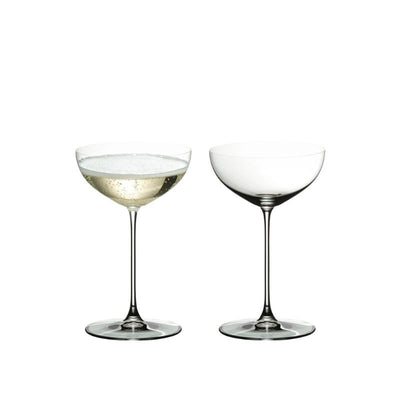
Highballs for the Mojito and Bloody Mary, a copa or rocks glass for the G&T and Negroni, a coupe for the Margarita, and a generous wine glass for the Aperol Spritz.
About The Author
Andi Healey is the Web Manager at The Riedel Shop with over 10 years of experience helping customers understand and appreciate quality wine and glassware. Based in Surrey, UK, Andi combines practical retail experience with a genuine passion for wine culture and making wine accessible to everyone.


Leave a comment