



The Judgment of Paris at 50

Andi Healey
Web Manager

Fifty years ago tomorrow, a small group of people gathered in a Paris hotel and accidentally changed the wine world forever.
Nobody planned a revolution.
Nobody expected one.
But by the time the scores were tallied on 24 May 1976, the idea that great wine belonged exclusively to France (in their opinion) was finished. Here is the full story.
The idea
Steven Spurrier was an Englishman running one of the best wine shops in Paris, the Cave de la Madeleine. He was respected by the French establishment but never entirely a part of it. Patricia Gallagher was working for Spurrier at his shop, and also at L'Academie du Vin, his wine school.
Their ability to speak English meant that the shop attracted a steady stream of American visitors and wine enthusiasts, and Gallagher had been fielding requests for Californian wines that she couldn't source.
With the American Bicentennial approaching in 1976, she suggested a tasting to mark the occasion. Spurrier liked the idea and his slight remove from the French wine establishment may have helped him see what others didn't: that California was producing wines worth taking seriously.
Finding the wines
Gallagher travelled to Napa Valley and Santa Cruz during her summer holiday in 1975. She reported back and Spurrier followed in early 1976. His aim was deliberately not to pick the obvious names. Robert Mondavi and Beaulieu Vineyard were already known quantities. He wanted the lesser-known producers who were quietly doing something exceptional.
After a week of tasting, he made his selections. Getting the wines to Paris was its own challenge. It was arranged for TWA to carry them alongside a tour group led by the legendary winemaker Andre Tchelistcheff. It was the best way to get twelve bottles of Californian wine into France without customs complications.
The tasting
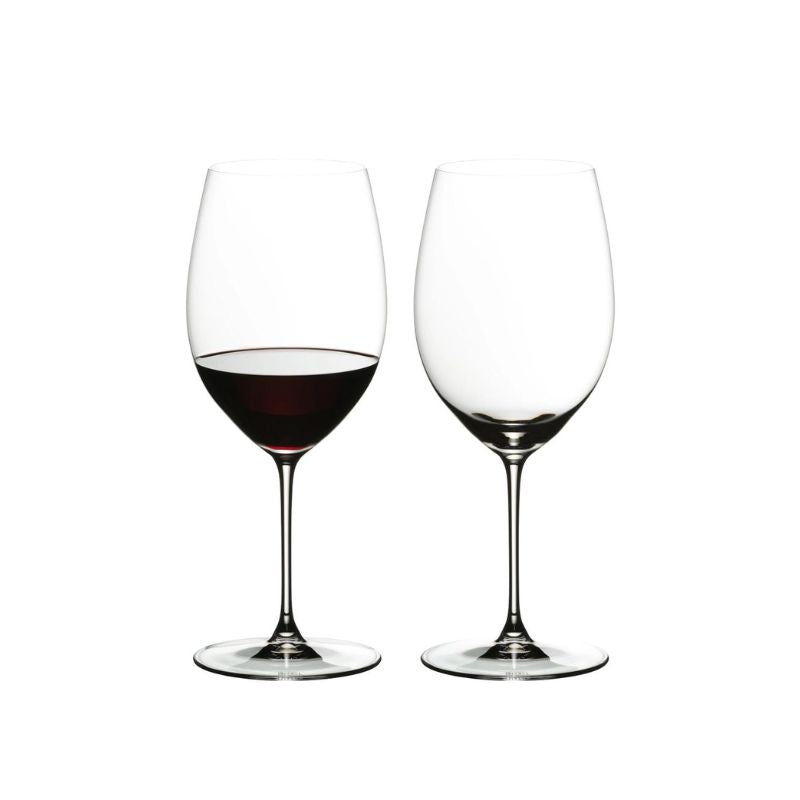
The format was simple. Two blind flights: six California Chardonnays against four white Burgundies, and six California Cabernet Sauvignons against four Bordeaux grands crus. The judges were nine of the most respected palates in France: sommeliers, wine writers, restaurateurs. Pierre Tari of the Association des Grands Crus Classes was among them. So was Raymond Oliver, owner of Le Grand Vefour and one of the most influential food and wine writers in the country.
It was, as George Taber of Time magazine wrote at the time, as strictly controlled as the production of a Chateau Lafite.
The judges tasted blind and were asked to grade each wine out of 20 points. No specific grading framework was given, leaving the judges free to award scores according to their own criteria.
An overall ranking of the wines was then established by averaging the sum of each judge's individual scores. The grades of Patricia Gallagher and Steven Spurrier were not taken into account, only those of the French judges.
Those esteemed "mesdames et messieurs" were not immune to the occasional stumble. One identified a Batard-Montrachet as definitely Californian on the basis that it had no nose. Another cried "Ahh. Back to France!" after sipping a Napa Valley Chardonnay.
The confusion was genuine, and it mattered enormously.
The results
When the scores came in, California had won both flights.
Taber was the only journalist present. His report appeared in Time magazine two weeks later.
The French press largely ignored the story.
The wine establishment did not.
The fallout
The reaction from the judges was not gracious. Several attempted to withdraw their scorecards when the results were announced. Odette Kahn, one of the most prominent figures in French wine writing, demanded hers back. She never spoke to Spurrier again.
The leaders of the French wine industry went further, banning him from the country's prestigious wine-tasting circuit for a year.
The message was clear.
When the French press eventually weighed in, the tone was predictably derisive. Nearly three months passed before Le Figaro ran a piece describing the results as laughable and not to be taken seriously. Le Monde followed six months after the tasting with a report headlined, in essence, "Let's Not Get Carried Away."
Philippe de Rothschild was reportedly furious. Which makes it all the more interesting that just two years later, in 1978, he joined Robert Mondavi, in Napa Valley, to create Opus One. Their first vintage (1979) is still available at around £1,500 per bottle.
It is worth noting that this was not the first time American wines had beaten French ones in a blind tasting. A similar event had taken place in New York just six months earlier, with Chardonnays judged in the same order of preference.
The French establishment dismissed it: American judges with an obvious bias, they said, and the Burgundies had probably been mistreated in transit.
But a blind tasting in Paris, judged entirely by French experts, removed both objections at a stroke.
That is why 1976 is the one that stuck.
The judges consoled themselves with a grand prediction: taste the wines again in ten or twenty years, they said, and France will win. California wines don't age.
They were wrong.

The 2006 rematch
On 24 May 2006, thirty years to the day, Spurrier organised a rematch. The original red wines, now thirty years old, were tasted simultaneously in London and in Napa at Copia. The panels included some of the most respected names in wine: Michael Broadbent, Hugh Johnson, Jancis Robinson, Michel Bettane.
Ridge Vineyards Monte Bello 1971 won on both sides of the Atlantic. In the combined results it finished eighteen points clear of second place. The next four wines were also Californian.
Chateau Mouton-Rothschild came sixth.
The ageing argument was settled.
There is a pleasing footnote here. Monte Bello had finished fifth in 1976, behind four French wines. It was the kind of result that got overlooked when all the headlines went to Stag's Leap (the winner). Thirty years on, Monte Bello turned out to be one of the great Californian reds of the twentieth century.
What it changed
The numbers tell part of the story. In 1976, Napa Valley had around 4,800 acres of Cabernet Sauvignon under vine. Today that figure exceeds 24,000. Growing regions from Washington state to central Chile planted Cabernet with new confidence in the years that followed.
The bigger shift was psychological. The idea that great wine could only come from Europe was not just challenged in 1976: it was disproved, in public, by French judges, under controlled conditions. That opened the door for a generation of sommeliers, buyers and drinkers to take wines from Australia, New Zealand, South Africa and South America seriously in ways that simply hadn't happened before.
Spurrier spent years as an outsider in Paris as a result. He eventually returned to England and continued working in wine until his death in 2021, by which point the world had long since caught up with his thinking.
The tasting lasted an afternoon, 50 years ago.
Nobody planned a revolution. Spurrier certainly didn't: he organised a tasting, invited a room full of experts, and let them get on with it.
The wine did the rest.
And fifty years on, the wine world they accidentally created looks pretty damn good from here.


Leave a comment