



Ten Years of Glassware Questions: From the Sensible to the “Did I Hear That Correctly?”

Andi Healey
Web Manager

Ten years doing this job has thrown up a lot of questions and conversations with customers. Most have been genuine, sensible questions, but a few have occasionally made me question my hearing.
Run a glassware shop for ten years and you learn two things. Firstly, people have a lot of questions about wine glasses. Secondly, some of those questions should probably have been asked after a little lie down.
Most questions are the ones you’d expect: “Can it go in the dishwasher?” “Which glass for which grape?” Others come out of the blue, and they’re usually the ones worth remembering.
Here are a few of both kinds. Where the answer touches on anything serious, I’ve kept it honest rather than trotting out the usual bits of received wisdom.
The Questions
“Does the glass actually change how the wine tastes, or is that just marketing?”
Given my job, have a guess at what my answer will be. The shape of the bowl and the width of the rim change how the wine reaches your nose and your tongue, and that affects your perception, there’s real research and evidence behind that much.
What’s possibly overstated is the idea that a single degree of bowl curvature turns an £8 Malbec into something profound. The glass changes the experience of the wine. It doesn’t physically change the wine itself.
“Can I put my crystal glasses in the dishwasher?”
Many modern lead-free crystal glasses, including most Riedel ranges, are dishwasher safe, when the manufacturer says they are.
Use a gentle cycle, avoid overcrowding and keep them away from anything heavy. Older leaded crystal is a different matter, and hand-washing is generally the safer option.
When in doubt, handwash. Always treat the stem as the weak point, that’s where most breakages happen, dishwasher or not, and however gentle you think you’re being, be a little more gentle still.
“Do I really need different glasses for different wines?”
You don’t “need” anything, wine will still get you drunk out of a jam jar.
But to fully appreciate what the winemaker was trying to achieve, whites are generally better served cooler and in smaller glasses to preserve that temperature and concentrate more delicate aromas, while reds get a bigger bowl for more air contact.
It’s a genuine, functional distinction, and really does make a difference.
“Why does this glass cost more than the bottle of wine I’m going to put in it?”
Because the glass will outlast dozens of bottles, assuming nobody puts it through the dishwasher standing next to a heavy saucepan.
Even machine-made crystal at this level involves a lot more than a mould - bowl thickness, rim finish, shape, size and the actual optical clarity all take work to get consistent.
“Is it true you should never use washing-up liquid on wine glasses?”
Not never, but a heavy hand with the Fairy Liquid can leave a residue that dulls the look of the glass and can interfere with the aromas of the next glass of wine you pour. A small amount of mild detergent and a thorough rinse is fine.
What will taint a glass is drying it with a tea towel that’s been used for something more fragrant than washing-up liquid ever was.
“Isn’t decanting just for show?”
Not every wine needs decanting, but most benefit from it. Pouring wine into a larger vessel increases its exposure to oxygen, which changes how its aromas and flavours develop.
A young, full-bodied red may benefit from an hour or more, while an older red can need much less.
With older reds and vintage Port, there’s another practical reason: decanting separates the wine from its sediment.
“Is a more expensive glass always better?”
No. Past a certain point, with machine-made glasses you’re paying for research and development, the machines that make them, consistency and finish rather than a dramatic change in taste.
With hand-made glasses you’re paying for the skill and expertise of the master glassblowers.
A well-made mid-range glass will outperform an expensive but poorly designed one.
“Does stem length matter?”
A little, but probably not for the reason most people think. A stem lets you hold the glass without warming the bowl or covering it with greasy fingerprints.
Beyond that, stem length is largely about design aesthetics, balance and how much you enjoy drinking from it. You don’t need a stem that could double as a radio mast.
“Do wine glasses ‘break in’ the more you use them, like a good pair of boots?”
No. This one’s pure folklore. Glass doesn’t season.
If a wine tastes better out of an older glass than a brand-new one, the most likely explanation is a variation in shape, a lingering trace of something from the packaging or box, or simply that you’ve relaxed into the second glass of the bottle.
“Do you sell a glass specifically for wine you’re drinking alone on a Tuesday?”
Not an actual product category, but not a bad instinct either.
The honest answer: use the glass you like using, that makes whatever you’re drinking taste good to you.
The ceremony around “correct” glassware does seem to matter far less on a Tuesday, on your own, than on a Saturday surrounded by good friends though.
“Can I use a red wine glass for white wine if I wash it first?”
Of course. The glass police aren’t going to kick your door in.
There are reasons different wines are served in different shapes, but wine doesn’t suddenly become confused because it was poured into the wrong bowl. If you’ve only got one decent glass in the cupboard, use it.
Although if you’re serving Sauvignon Blanc in a pint glass you pinched from the pub, I do reserve the right to judge you slightly.
Someone once asked me if I thought they could return an opened bottle of wine because it “didn’t taste like it did on holiday.”
I’m afraid I struggled to answer that one with a straight face. Wine (and cocktails) do always seem to taste better on holiday, but it’s probably more to do with ambiance, company, sunsets, and relaxation than the wine itself.
“Can I return these glasses because the wine tastes bitter since my divorce?”
I genuinely didn’t know where to start with that one. The glasses were fine, but I got the strong impression that everything else wasn’t.
“If I put my decanter in the microwave / blender, will it decant the wine faster?”
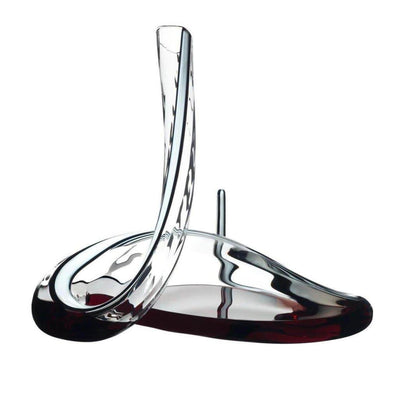
Please, for the love of everything, don’t. Crystal and sudden uneven heat get on very badly, and a cracked decanter won’t decant anything, ever again.
“Hyperdecanting” in a blender (yes, it’s a thing, I blame YouTube) runs the risk of going past the sweet spot where the wine is at its best.
Proper aeration takes time and patience. If you’re that desperate for a drink, have a glass of champagne while you wait.
A customer asked if they could return their glasses because they’d since gone teetotal and didn’t want the temptation sitting in the cupboard.
Fair enough, and genuinely one of the better reasons I’ve been given.
Someone once tried to return five unbroken glasses from a set of six, for a complete refund, insisting the remaining five were “faulty as a set” after they’d knocked one off the kitchen worktop onto the (quarry tiled) floor and it smashed.
Bold strategy. Didn’t work, but I admired the confidence. It was covered by our half-price replacement for accidental damage guarantee though.
And finally, my favourite one, although this wasn’t from a customer but from a friend of a friend in the pub…
“I don’t like wine. Which glass will make it taste less like wine?”
I honestly loved this question.
Not because I had an answer. I didn’t. But because after years of talking about wine and glasses, it was a useful reminder that we’re sometimes in danger of taking all this stuff far too seriously.
We can debate bowl shapes, stem length, rim diameter, decanters and whether one glass is marginally better than another, until the cows come home.
And yes, the right glass genuinely can make a difference.
But none of that matters if you simply don’t like wine.
There’s no prize for pretending to enjoy something because somebody told you that you should.
Wine is supposed to be pleasurable. If it isn’t, you’re doing it wrong.
Cheers!
Andi
However you describe it, it tastes better from the right glass. Explore our full range of wine glasses.
Browse Wine GlassesWhy choose The Riedel Shop
Andi Healey is the Web Manager at The Riedel Shop with over 10 years of experience helping customers understand and appreciate quality wine glassware. Based in Surrey, UK, Andi combines practical retail experience with a genuine passion for wine culture and the stories behind the grapes.
- Official UK Riedel specialist retailer
- Part of the Art of Living Cookshop family (est. 1972)
- Expert guidance on glass selection
- Physical stores in Surrey: Cobham and Reigate


I have been buying your glasses since Joanna Simon demonstrated them many years ago at a meeting hosted by Alan Taylor Restell. I have six types and all my children and grandchildren have been given them as presents. My wife and I have accidentally broken at least a dozen. I recently bought a six pack! I didn’t now you had a half price replacement service; how does that work? As for your questions, I agree and already practice all your tips. Another I don’t like is the clinking of glasses; the practice is risky and forbidden at my table. It would never be seen in an Officers’ Mess.
Kind Regards Roy (Retired RAF Gp Capt)
Leave a comment