



Nobody reinvents the wine glass twice. Riedel did it three times.

Andi Healey
Web Manager

Riedel turns 270 this year. Here are some facts about this extraordinary glassmaking family that are genuinely worth knowing.
Key takeaways
- Riedel was founded in 1756 in Bohemia, the same year Mozart was born and Casanova escaped from the Doge's Palace.
- Walter Riedel (8th generation) doubled the size of a radar screen the military thought was possible, and paid for it with ten years in a Soviet prison camp.
- The 9th generation owner escaped from a prisoner-of-war train crossing the Alps, and went on to reinvent the wine glass.
- The Sommeliers Burgundy Grand Cru has been in MoMA's permanent design collection since 1958.
- The Sommeliers range launched in 1973 and was met with real scepticism. It now runs to 28 shapes (reduced from 31).
- Maximilian Riedel, the 11th generation, is on a mission to end the dominance of the Champagne flute.
In this article
Where it all started
The year 1756 is better known for other things. Mozart was born. Casanova escaped from the Doge's Palace in Venice. The Seven Years' War began, shaking governments across Europe. In Bohemia, part of the Habsburg Monarchy, a glassmaker named Johann Leopold Riedel put the first Waldglas works into operation.
That is where the story begins. Not in Austria, where the company is based today, but in the forests of what is now the Czech Republic, where dense woodland provided the fuel and the raw materials for glassmaking, and where the Riedel name would spend the next two centuries building something remarkable.
By the time Josef Riedel the Elder (sixth generation, 1816 to 1894) took over, the family had become an industrial force. Josef owned eight glassworks, two textile mills, and numerous coalmines. His employees called him "Mr. Father." His contemporaries called him the Glass King of the Iser Mountains. The Pope gave him an Order. He was also, according to glass historians, the inventor of uranium glass: a vivid yellow-green material he named Annagelb and Annagrün after his wife Anna. It glows under ultraviolet light. It is not relevant to wine service. Few 270-year-old companies have a uranium-glass invention in their backstory. Riedel does.
Worth knowing: In 1883, the same year Josef installed electric lighting in his factories for fire safety, the Riedel production catalogue introduced speciality optical glass for lighthouse Fresnel lenses, which they exported successfully until the outbreak of World War I.
NEW FOR 2026
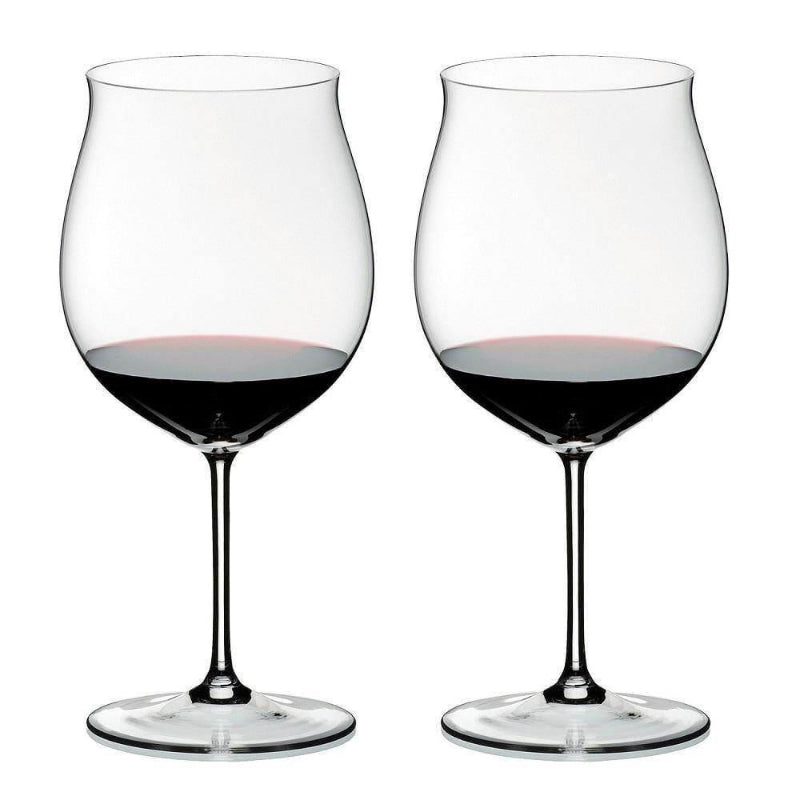
Riedel Sommeliers Burgundy Grand Cru Glasses (Pair)
Save up to 20%
Buy Now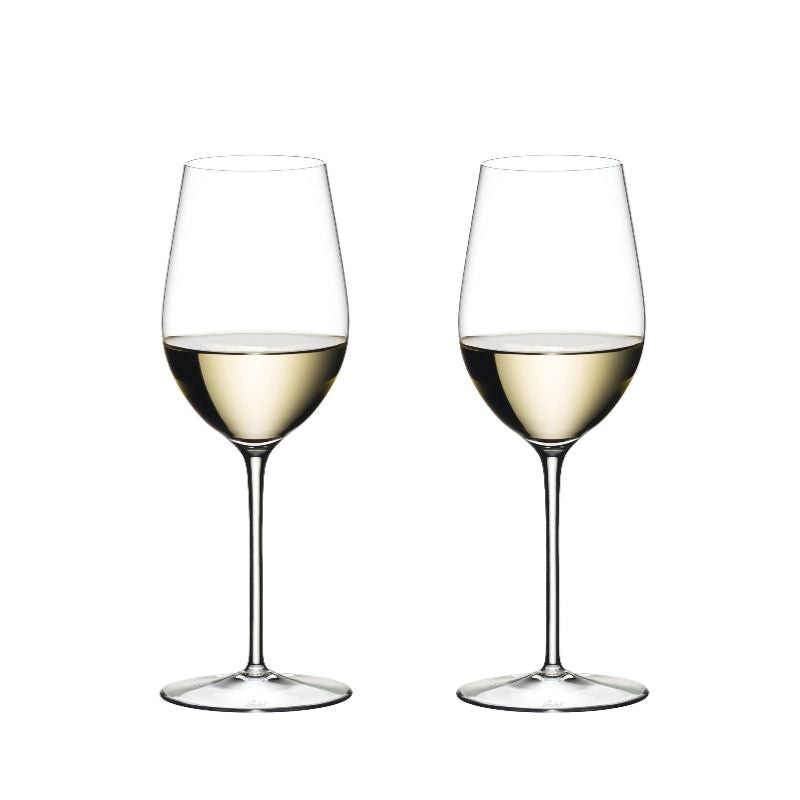
Riedel Sommeliers Riesling / Zinfandel Glasses (Pair)
Save up to 25%
Buy Now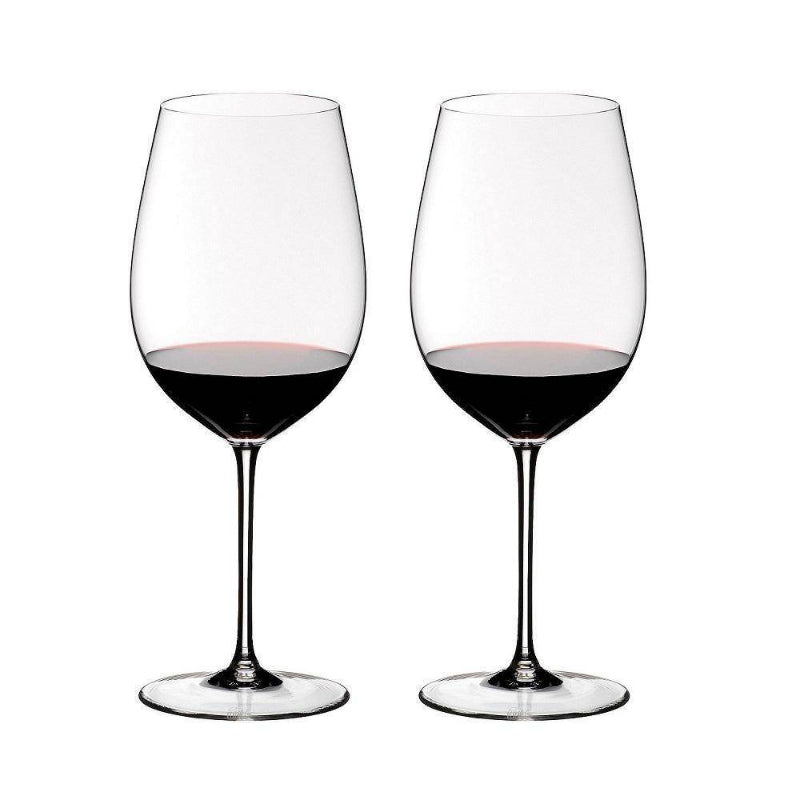
Riedel Sommeliers Bordeaux Grand Cru Glasses (Pair)
Save up to 25%
Buy NowThe Bohemian empire did not survive the twentieth century. What ended it was a combination of global depression, war, Soviet occupation, and a glass screen.
Walter Riedel: the man who paid for a radar screen with ten years of his life
Walter Riedel, eighth generation, took over the family company on his father Josef Junior's death in 1924. He inherited both the business and the era: a global depression in the 1920s, the crash of the New York Stock Exchange in 1929, national protectionism spreading across Europe, exports shrinking, unemployment growing. Walter kept the company alive through all of it. By the time the Second World War arrived, most of his competitors had gone under.
Then the Ministry of Aviation came calling.
Shortly after the war broke out, Walter had begun making fine, spinnable fibreglass for rope wool production. Another industrialist, Werner Schuller, had developed a new method for spinning fibreglass without platinum, and the Ministry of Aviation recognised a military application for it. Riedel and Schuller were more or less coerced into a joint venture to produce it.

The Ministry then asked Walter whether he could manufacture a 76-centimetre glass screen for a ground-based radar system.
The maximum anyone had ever achieved was 38 centimetres. No one believed it was possible to go larger.
Three weeks after being asked, Walter Riedel arrived in Berlin with a 76-centimetre tube. The military was astonished.
He had effectively doubled what was thought possible.
That same year, 1945, the new Czechoslovakian government ordered Walter to continue running the now-nationalised Riedel company. He complied briefly, then was taken into custody.
The entire Riedel fortune was claimed by the state. Eight generations of accumulated work (glassworks, factories, property, private assets) disappeared overnight. The Bohemian chapter of Riedel history ended there.
He was sent first to a camp in Eastern Siberia, then transferred to central Russia as a "forced contractor," initially put to work rebuilding Soviet glass factories. When his five-year contract expired, he tried to leave. The Russians had other plans. He appealed to the Austrian Embassy in Moscow, was arrested as a spy for allegedly disclosing details of his work to the Embassy, and sentenced to 25 years' imprisonment.
Walter returned to Austria in 1955, after Stalin's death and sustained diplomatic pressure from the German Chancellor Adenauer on behalf of prisoners of war. He had been gone for ten years. His son Claus had spent that decade finding a different way back.
The man who escaped from a train and reinvented the wine glass
Claus Josef Riedel, ninth generation and the person who would change how the entire world thinks about glassware, spent ten months as an American prisoner of war near Pisa after World War II. When he was eventually put on a train back to Germany for repatriation, he jumped from it as it crossed the Brenner Pass into Austria.

He landed seventeen kilometres from the nearest village. He walked there through the snow in his prison uniform. The head of the local glassworks, a man named Daniel Swarovski, had been taught his trade by Claus's great-grandfather Josef and recognised the Riedel name immediately. He took Claus in, funded his chemistry degree at the University of Innsbruck, and eventually, on Walter's return, helped father and son buy a bankrupt glassworks in Kufstein, Austria, in 1956.
Two hundred years after the founding of the first Waldglas works in Bohemia, the Riedel kilns fired up again. In a different country, starting with nothing.
Claus spent the following years investigating something nobody had seriously tested before: whether the shape of a glass changes the taste of what's in it. He spent sixteen years studying the physics of wine delivery to the palate before the first varietal-specific collection reached market. He was not in a hurry. By the time he was done, he had been married five times (twice to the same woman), had won dozens of design prizes, and had produced a piece of glassware that ended up in a museum in New York.
He was also, in his spare time, known for taking his Harley-Davidson through the Brenner Pass in all weathers. The same pass he'd jumped from a train on as a prisoner of war.
The glass in MoMA
In 1958, the Museum of Modern Art in New York acquired the Sommeliers Burgundy Grand Cru glass for its permanent design collection. The glass holds 1050 millilitres (36 ounces) of liquid. That is roughly one and a half bottles of wine. It is, by any reasonable measure, enormous.

Decanter magazine later described it as the finest Burgundy glass of all time. It has also been called a "beautiful monster."
MoMA acquired it because it is a serious piece of functional design. Thin-blown, undecorated, built around the Bauhaus principle that form should follow function.
At the time of acquisition, Claus Riedel's wine-specific thinking was still being developed.
The full Sommeliers range was fifteen years away. MoMA didn't wait for the collection. It saw the idea in the glass.
The glass that sits in MoMA's permanent collection, alongside Eames chairs and Braun radios, is the same one a sommelier will pick up in a top restaurant tonight. The MoMA catalogue confirms this.
Along with the Burgundy Grand Cru, a further 127 Riedel glasses are in MoMA's permanent design collection. In 1959, the Exquisit Bordeaux glass was named the most beautiful glass in the world at the Corning Museum of Glass. The design awards kept coming: 28 in total during Claus's tenure. He seems to have collected them with the same thoroughness he applied to wives and motorcycles.
The Sommeliers collection: a very long proof of concept
The full Sommeliers collection launched in 1973. It was, at the time, met with real scepticism. The idea that a glass shape could actually alter the experience of a wine was not mainstream thinking. Restaurants used whatever glasses they had. Wine professionals thought the proposition was, to put it charitably, unlikely.
The collection launched with ten shapes. Each one designed to enhance a specific grape variety, developed through extended blind tasting with some of the world's leading palates. Robert Parker contributed. Angelo Gaja contributed. Robert Mondavi contributed. Each shape came from blind tasting, not from a drawing board.
The collection now runs to 28 shapes (reduced from 31). Handmade in Kufstein, Austria, where furnaces burn at 3,632 degrees Fahrenheit and five people work on every glass from the moment the molten crystal leaves the furnace to the moment the rim is laser-cut and hand-polished. Fifty per cent of the crystal is recycled Riedel glass.
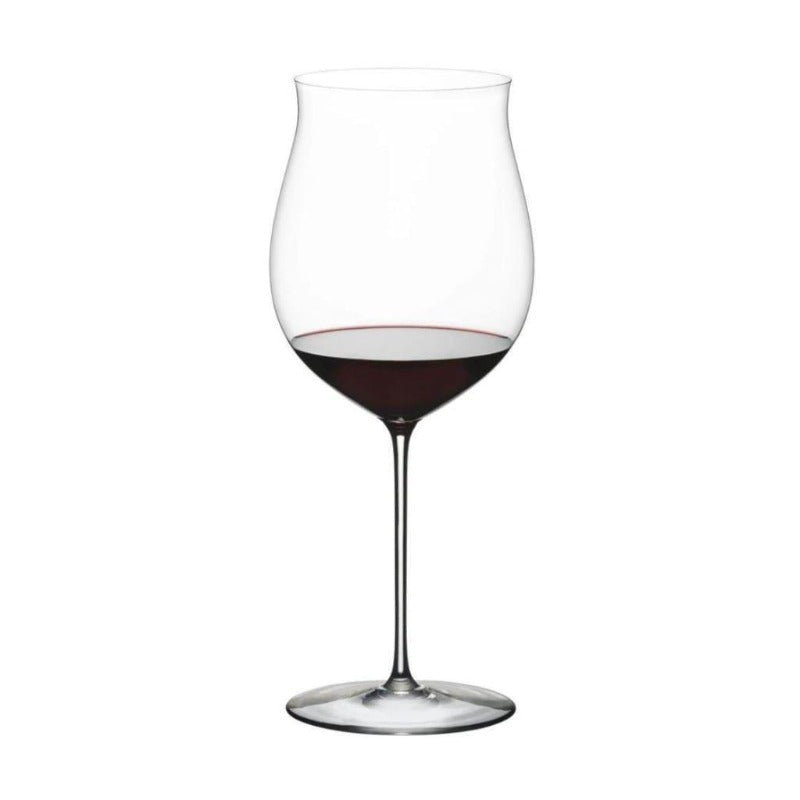
Riedel Superleggero Burgundy Grand Cru Glasses (Pair)
Save up to 25%
Buy Now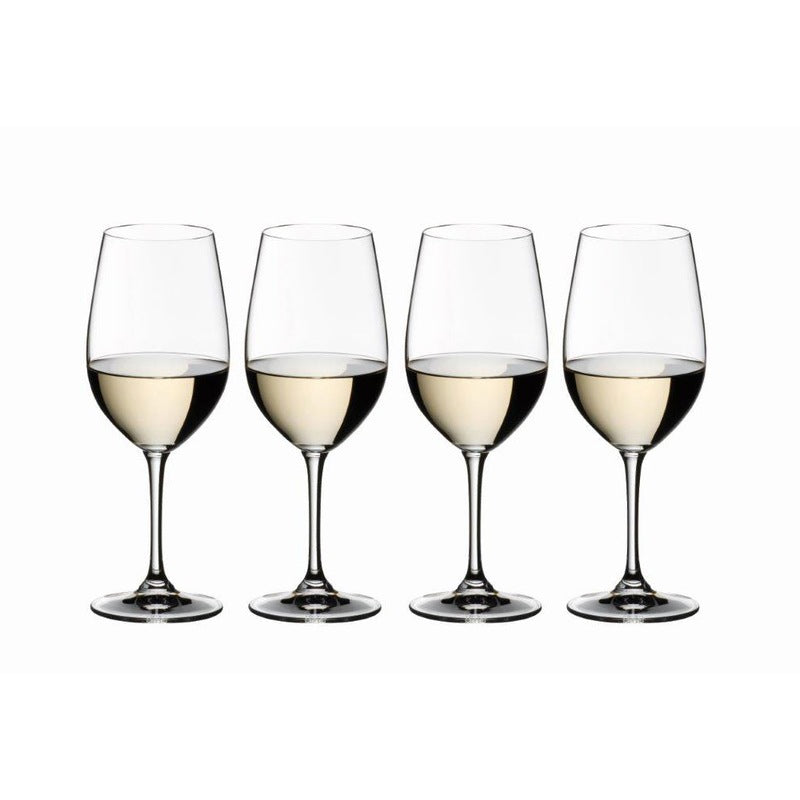
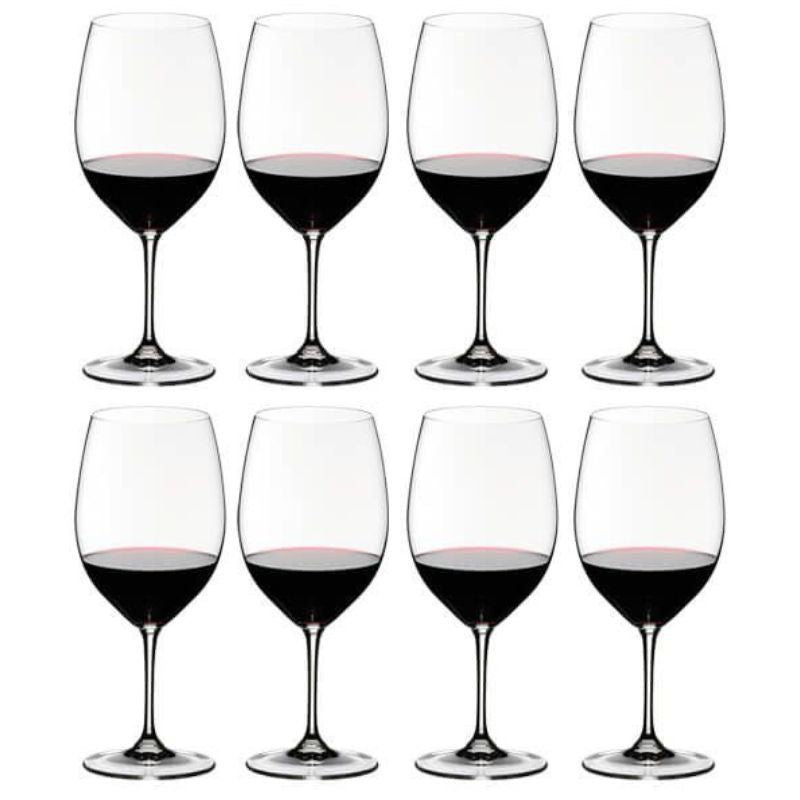
Riedel Vinum Riesling / Zinfandel Glasses (4 Pack)
Save up to 30%
Buy NowWorth knowing: The Sommeliers range is over fifty years old. The shapes are more or less unchanged. That tells you how right Claus Riedel got it in the first place.
Georg Riedel and the tasting demonstrations
Georg Riedel, tenth generation and Claus's son, took over in 1994. Claus proved the concept in the laboratory and the design studio. Georg ran the same proof in dining rooms and at trade events around the world. He is the reason varietal-specific glassware became the global standard.
The mechanism was the tasting demonstration: the same wine, poured into different glasses, tasted in sequence. The differences in aroma and delivery are, for most people, immediately perceptible. The same wine can taste flat, then vivid, then harsh, then balanced, depending only on the vessel. Georg has been running versions of this demonstration for decades. He travels, reportedly, with a small "SOS version" of Riedel glass in his luggage.
He also made Riedel accessible. In 1986 he introduced Vinum: the first machine-made varietal-specific range in history, bringing the Sommeliers thinking to a price point that worked for everyday use. Georg also took Riedel to the American market, recognising its potential in 1979 and building North America into the company's largest export market. In 2004 he acquired Spiegelau and Nachtmann, creating a group with collective glassmaking experience stretching back almost a thousand years across all three brands.
Maximilian Riedel and the end of the flute
Maximilian Riedel, eleventh generation and current CEO, would like you to know that he ended the dominance of the Champagne flute. He says so directly, and the industry has largely caught up with him.
In 2014, Maximilian launched Riedel's first wider-bowled Champagne glass, arguing that Champagne is a wine and should be treated as such. A flute may keep the bubbles, but it suppresses the aromas. A tulip-shaped bowl exposes more surface area to oxygen, allowing the floral and fruity character of a wine to express itself alongside the effervescence. In a flute, the yeast character dominates. In a wider bowl, you get the full picture.
The industry standard has moved. Flutes are increasingly rare in serious wine service, and increasingly common in the back of the cupboard. The Champagne glass now looks, in most serious settings, considerably more like a wine glass.
Maximilian also designed the O series in 2004: stemless varietal-specific glasses that brought the functional thinking into a format that could survive a dishwasher and a kitchen cabinet without incident. He built Riedel's direct-to-consumer online sales business. He has won design awards for his decanters. And he became CEO in 2013, at 36, taking over from his father Georg.
Eleven generations.
Two hundred and seventy years.
One family, one material, one question: what does this glass do to what's inside it?
They're still asking it, and they're still innovating.
270 years at a glance
| Year | What happened |
|---|---|
| 1756 | Johann Leopold Riedel founds the first Riedel glassworks in Bohemia, Habsburg Monarchy. Mozart is born. |
| 1840s | Josef Riedel the Elder (6th generation) creates Annagelb and Annagrün, uranium glass named after his wife. It glows under UV light. |
| 1924 | Walter Riedel (8th generation) takes over the family company on his father's death, and runs it through global depression and two world wars. |
| 1939 | Walter begins producing spinnable fibreglass. The Ministry of Aviation recognises a military application and coerces him into a production venture. |
| 1944 | Walter produces a 76-centimetre radar screen, double what was thought possible, for a secret Ministry of Aviation project called "Tonne." The military is astonished. |
| 1945 | Soviet forces march in. The Czechoslovakian government nationalises the Riedel company. Walter is arrested and sent to Siberia. The entire Bohemian Riedel empire (200 years of work) is gone overnight. |
| 1955 | Walter Riedel returns from ten years' imprisonment in Russia. |
| 1956 | Claus and Walter, backed by Swarovski, take over a bankrupt glassworks in Kufstein, Austria. The modern Riedel company begins. |
| 1958 | MoMA acquires the Sommeliers Burgundy Grand Cru for its permanent design collection. 127 further Riedel glasses follow. |
| 1959 | The Exquisit Bordeaux glass is named the most beautiful glass in the world at the Corning Museum of Glass. |
| 1973 | The Sommeliers collection launches: the world's first grape-varietal-specific wine glass range. Ten shapes, met initially with scepticism. |
| 1986 | Georg Riedel introduces Vinum: the first machine-made varietal-specific range in history. |
| 1994 | Georg Riedel takes over from his father Claus as President and CEO. |
| 2004 | Riedel acquires Spiegelau and Nachtmann. Maximilian launches the O stemless range. |
| 2013 | Maximilian Riedel (11th generation) becomes CEO of Tiroler Glashütte and its worldwide subsidiaries. |
| 2014 | Maximilian launches Riedel's first wider-bowled Champagne glass, accelerating the industry shift away from the flute. |
| 2026 | Riedel turns 270. The Kufstein factory still makes glasses by hand. The shapes are still developed through tasting. |
Browse the full Riedel range at The Riedel Shop, with free UK delivery on orders over £50.
Shop Riedel GlasswareFrequently asked questions
How old is Riedel?
Riedel was founded in 1756 in Bohemia, making it 270 years old in 2026. It is one of the oldest family-owned glassware businesses in the world still in active operation, and is currently managed by the eleventh generation of the Riedel family.
Where are Riedel glasses made?
Riedel's mouth-blown ranges, including the Sommeliers collection, are made at the Tiroler Glashütte factory in Kufstein, Austria, where the company has been based since 1956. Machine-made ranges including Vinum and Veloce are produced at facilities in Bavaria. All Riedel glassware is manufactured in Austria or Germany.
Does the shape of a wine glass really make a difference?
Yes, and this has been demonstrated in repeated blind tastings rather than asserted as marketing. The same wine poured into differently shaped glasses delivers different aromatic compounds to the nose at different concentrations, and directs the liquid to different parts of the palate. The difference is perceptible to most people within a single tasting. It is why Riedel spent sixteen years developing the Sommeliers collection before releasing it, and why the shapes have remained largely unchanged for fifty years.
What is the Sommeliers collection?
The Sommeliers collection, launched in 1973, was the world's first grape-varietal-specific wine glass range. Each shape was developed through extended blind tasting in collaboration with leading winemakers and critics including Robert Parker, Angelo Gaja, and Robert Mondavi. The collection is handmade in Kufstein and currently runs to 28 shapes (reduced from 31). The Sommeliers Burgundy Grand Cru has been in MoMA's permanent design collection since 1958.
Is Riedel connected to Spiegelau?
Yes. Georg Riedel acquired Spiegelau in 2004, bringing it into a group that also includes Nachtmann. The three brands operate with distinct identities and price points (Riedel at the prestige end, Spiegelau for high-quality everyday and professional use, Nachtmann for decorative and entertaining glassware), and share the same parent company and manufacturing expertise.
What is the difference between handmade and machine-made Riedel?
Riedel's handmade ranges, principally Sommeliers and Veritas, are mouth-blown and hand-finished at Kufstein by teams of skilled glassmakers. Five people work on each glass from furnace to final polish. They are thinner, lighter, and more variable in character than machine-made equivalents, and they cost more. Machine-made ranges such as Vinum and Veloce apply the same varietal-specific design thinking with greater consistency and durability, at a more accessible price point. Both approaches are valid; the right choice depends on how and where you use them.
Why is the Champagne flute being replaced?
The flute preserves carbonation but suppresses aroma. A wider tulip-shaped bowl exposes more surface area to oxygen, allowing the wine's floral and fruit character to develop alongside the bubbles. Riedel has been making this argument since 2014, when Maximilian Riedel launched the company's first wider-bowled Champagne glass. The industry has largely caught up: most serious wine service now uses a tulip or bowl shape for Champagne rather than a flute. Our Spiegelau Definition Champagne glass is a good example of what that looks like in practice.
Can I visit the Riedel factory in Austria?
Yes. The Riedel Flagship Store, Museum, and Factory are open to visitors at Weissachstraße 30, 6330 Kufstein, Austria. Guided public tours of the factory run Monday to Friday at 11am and 1:30pm. The museum covers eleven generations of glassmaking history, including the family's escape from post-war Bohemia and the development of varietal-specific glassware. Worth a detour if you find yourself near Innsbruck.


Leave a comment