



No and Low Wine: The Good, the Fine, and the Grape That Had a Very Bad Day

Andi Healey
Web Manager

No and Low Wine: Where the Category Actually Stands
A bottle of alcohol-free sparkling wine selling for over £100* is a thing that would have seemed highly unlikely five years ago.
Not as a novelty. Not as a gimmick.
As a serious, considered product aimed at people who know exactly what good wine costs and have decided to spend that kind of money on something without the alcohol.
The no and low category has arrived. It has opinions about itself. It has a PR budget. It is turning up at dinner parties without being asked.
Whether it has fully earned that confidence is a more complicated question, and one worth actually answering rather than sidestepping with the usual "it's come such a long way!" and a polite change of subject. So let's do that.
Key Takeaways
- Over half of UK adults now buy no or low alcohol drinks. Beer still dominates, but wine is catching up
- No-alcohol wine grew 8% in 2024; low-alcohol wine fell 5% - the direction of innovation is full removal, not partial reduction
- New UK duty rules (from Feb 2025) charge by ABV strength, making lower-alcohol wines more price-competitive on the shelf
- "Zebra drinking" and "coasting" are naming what many drinkers already do: alternating alcoholic and non-alcoholic, or choosing reduced-ABV options
- The category divides cleanly into genuinely dealcoholised wine and grape-based beverages that approximate wine - they are not the same thing
- The glass matters at least as much for no and low as for conventional wine, and possibly more
- Universal glasses like the Riedel Grape range and Spiegelau Definition series work well across no and low styles
In This Article
Where the Market Actually Is in 2026
The numbers tell a clear story, though not quite the one the headlines usually suggest. According to Mintel, 53% of UK adults drank a low or no alcohol beer, wine, cider, spirit, or cocktail in the past twelve months. That is not a niche. The category has moved decisively beyond Dry January and designated drivers.
Within wine specifically, the picture is more nuanced. Low-alcohol wine actually fell in volume in 2024, down around 5% on the previous year. No-alcohol wine grew by 8%. That difference matters. The direction of change is firmly toward full removal rather than partial reduction, partly because the technology for complete dealcoholisation has improved hugely, and partly because 0.5% ABV carries a cleaner message than 5.5%.
The duty shift: Since February 2025, UK alcohol duty is charged by ABV strength in 0.1% increments. For a typical 14.5% still red, the duty component rose by over 20%. Lower-ABV and alcohol-free wines now have a genuine price advantage on the shelf, not just a health one.
Quality and ambition at the premium end are real and accelerating. French Bloom, a high-end French sparkling no-alcohol wine, launched at over a hundred euros. Kolonne Null's no-alcohol Riesling appeared at similar prices. Bolle, an English sparkling wine brand using a double-fermentation approach, launched its Grand Reserve at £50. These are not products aimed at people who cannot afford proper wine. They are aimed at people who have made a considered choice and expect quality in return.
That is a different market from where no and low started. And it changes how we should think about the experience of drinking it.
What Is Actually Driving It
The wellness angle gets most of the media coverage, but it only tells part of the story. No and low buyers tend to be younger, higher earners, with an even gender split. This is not a category propped up by people who cannot afford proper wine. It is a considered choice, made by people who drink well and have decided that drinking differently sometimes is part of that.
Almost half of UK alcohol drinkers now buy both standard and no/low products, often on the same occasion. That is the more revealing number. No and low is not a separate, lesser track running alongside real drinking. For a growing number of people, it is just another option on the menu.
It is not that people are drinking less as a form of deprivation. It is that the decision to drink, and what to drink, has become more considered. Which means the experience of drinking it has become more considered too. And that is precisely where glassware enters the picture.
Coasting, Zebra Drinking, and Intentionality
A few months ago, I read an article in The Guardian that gave names to two terms that neatly captured what a lot of people are already doing.
"Coasting" is choosing a wine, beer, or cocktail with roughly half the alcohol of the traditional version. Ocado reported a 4,000% increase in 3-9% ABV wine over the previous year.
4,000%!
That is a genuine shift in behaviour, and also a fairly strong argument for stocking a few lower-ABV bottles before you next host a dinner party.
"Zebra drinking," or zebra striping, is alternating between alcoholic and non-alcoholic drinks throughout an evening: start with an NA cocktail, have a glass of wine, finish alcohol-free. Moderation without deprivation. Flexibility without compromise on taste or quality. And also, without needing to explain yourself to anyone, which is probably a large part of the appeal.
Two ways of drinking less
Coasting: Choosing lower-ABV options throughout. Half the alcohol, same format. Good for long evenings, midweek occasions, or anyone who wants to wake up feeling human.
Zebra drinking: Alternating between alcoholic and non-alcoholic drinks. The full-strength glass tastes better for the contrast, and the evening stays social without the next-day misery.
Both approaches reward having good no and low options available, served properly.
The through-line across both is intentionality. Nobody doing either of these things is doing it absent-mindedly. Which means they are paying attention to what is in the glass. Which means the glass matters.
The Honest Truth About the Wines
Not all of it is good. That needs to be said before anything else, because the category has attracted enough breathless coverage to give the impression that alcohol-free wine has solved all its problems and is now simply wine, but better.
It hasn't. Some of it is excellent. A lot of it is fine. And some of it tastes like a grape had a very bad day.
The category divides fairly cleanly into two camps, and knowing which you are buying makes a meaningful difference.
The first is genuinely dealcoholised wine: real wine that has been fully fermented and then had the alcohol removed, through spinning cone column technology, vacuum distillation, or similar processes. Done well, this produces something with recognisable wine character, the variety, the acidity, the structure, sometimes even a sense of terroir. The best examples are genuinely interesting to drink. The worst taste flat, cooked, and slightly artificial, because something has been taken away and nothing put back.
The second camp is grape-based beverages produced to approximate wine without fully fermenting: different processing, sometimes with added botanicals or flavourings to compensate for the missing complexity. Some are pleasant. Most are not.
Buying tip: Look for producers who are transparent about their method. If the label says nothing about how the alcohol was removed, it probably was not removed from anything particularly interesting to begin with. Good producers talk about their process because it is genuinely interesting. Bad ones do not mention it.
The premium end, the French Blooms and Kolonne Nulls of the world, are almost exclusively in the dealcoholised camp. That is why they cost what they cost, and why they reward proper glasses.
Why the Glass Still Matters, Possibly More Than Usual
In a conventional wine, alcohol does a lot of quiet work. It carries aroma. It gives the wine weight and texture on the palate. It contributes to the finish. It is, in short, doing rather more than just getting you gently squiffy. When you remove it, those jobs go undone unless the wine has enough other things going on to compensate.
A well-made dealcoholised wine will have acidity, fruit character, and structure. What it will not have is the weight and length that alcohol provides. That is not a flaw. It is just a fact about what the wine is.
A good glass helps more here than you might expect. By concentrating and directing aromatics, and by presenting the wine at the right point on the palate, a well-designed bowl can do some of the work that alcohol is no longer doing. A poor glass, too small, too narrow, the wrong shape for the style, can flatten the experience further. With a full-strength wine, you can sometimes get away with an imperfect vessel because the wine has enough to give. With no and low, you are working with finer margins, and the glass becomes a more significant variable.
Which Glasses Work Best
The good news is that you do not need specialist equipment. The same broad principles that apply to conventional wine apply here: match the glass to the style, use something large enough to let the wine breathe, and avoid anything too narrow or too small.
For no and low whites and lighter styles
A medium tulip bowl is your friend. The Riedel Extreme Riesling/Sauvignon Blanc glass is a strong all-rounder here: wide enough to let the aromatics develop, with a rim that directs the wine clearly. No and low whites tend to lead with fruit and freshness rather than weight, so you want a glass that preserves those top notes rather than letting them dissipate before they reach you.
For no and low reds
The challenge is different. Without alcohol to soften tannin and add body, a dealcoholised red can taste angular or thin if it is not given room to open up. A slightly larger bowl helps. The Riedel Grape Cabernet/Merlot glass or the Spiegelau Definition Bordeaux gives the wine space to breathe and softens the experience without the glass doing anything dramatic. Both are versatile enough to cover most styles.
For no and low sparkling
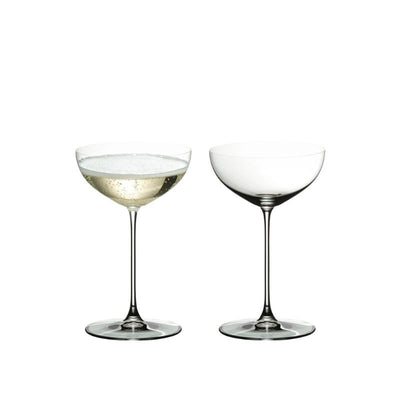
A flute is usually not the best choice even for conventional fizz, and it is even less useful here. It restricts aromatics, shows you bubbles, and makes the wine look elegant while quietly preventing you from actually tasting it. A wider tulip or a standard white wine bowl lets the aromatics come through properly. The Riedel Wine Friendly 003 works well with the more complex sparkling no-alcohol wines now appearing at the premium end of the market. The extra width means you actually taste what you are drinking rather than just watching it fizz and feeling sophisticated.
The case for universal glasses: If you want one glass that handles no and low across all styles, the Riedel Grape range and Spiegelau Definition series are the practical answer. Both are designed to be versatile, both are priced accessibly, and both will outperform anything not built for the job.
Temperature Still Matters
One thing that does not change with no and low wine is the importance of serving temperature. If anything, it matters more, because there is less alcohol to paper over the cracks.
A no and low white served too warm will taste flat and sweet. A dealcoholised red served too cold will taste sharp and thin. The same rough rules apply as for conventional wine: whites and rosés around 8-12°C, lighter reds around 14-16°C. Take it out of the fridge fifteen minutes before you pour it, or let it sit for a few minutes if it has come straight from the rack.
Get the temperature right, use a proper glass, and a well-made no or low wine will give you a genuinely satisfying experience.
It will not taste exactly like the full-strength version. But increasingly, it is not really trying to. It is its own thing, and the best of them have earned the right to be taken seriously.
* French Bloom La Cuvée Blanc de Blancs Vintage, £105 at Fortnum & Mason. Made from organic French Chardonnay, this alcohol-free sparkling wine opens with notes of caramelised hazelnut, dried apricot, toasted bread, and a hint of honey. The palate is creamy, with crisp acidity and a fresh, persistent finish. It delivers the richness and character you’d expect from a well-aged sparkling wine, creating an experience that’s both refined and unexpected. Apparently!
Find the right glass for no and low wine. The Riedel Grape range and Spiegelau Definition series cover every style, at a price that makes sense.
Shop Riedel Grape Shop Spiegelau DefinitionFrequently Asked Questions
Does it actually matter what glass I use for no and low wine?
Yes, and possibly more than for conventional wine. Alcohol carries aroma and adds texture, so when it is absent a well-designed glass has more work to do. A bowl that concentrates aromatics and presents the wine at the right point on the palate can noticeably improve the experience of a well-made dealcoholised wine.
What is the difference between no-alcohol and low-alcohol wine?
In UK labelling terms, alcohol-free wine is below 0.5% ABV, low-alcohol wine is between 0.5% and 1.2%. Dealcoholised wine can appear under either label depending on the final ABV after processing. Wines labelled "reduced alcohol" typically sit between 1.2% and 5.5%, which is where "coasting" territory lives.
Is dealcoholised wine the same as grape juice?
No. Dealcoholised wine starts as fully fermented wine, with all the complexity that fermentation produces, and then has the alcohol removed. Grape juice never ferments. A good dealcoholised wine retains recognisable wine character: acidity, structure, varietal fruit. Grape juice does not.
Why did low-alcohol wine fall while no-alcohol wine grew?
Partly because the messaging is cleaner at 0.5% than at 5.5%. Partly because the technology for full dealcoholisation has improved and producers are investing there. And partly because the new UK duty structure, which charges by ABV in 0.1% increments, creates a cleaner price break at or below 0.5% than at partial reductions.
What is zebra drinking?
Alternating between alcoholic and non-alcoholic drinks throughout an evening. An NA cocktail, then a glass of wine, then an alcohol-free option. Moderation without deprivation: the full-strength drinks taste better for the contrast, and the morning after is considerably more manageable.
What is coasting?
Choosing wines, beers, or spirits with roughly half the alcohol content of the standard version. A 5-6% wine rather than 13%, a session beer rather than a pint of strong lager. Ocado reported a 4,000% increase in 3-9% ABV wine, which suggests coasting is well past the trend-piece stage and into actual consumer behaviour.
Which Riedel glass is best for alcohol-free wine?
The Riedel Grape range is the practical starting point. The Riesling/Zinfandel glass handles whites and lighter styles well. The Cabernet/Merlot works for dealcoholised reds. For sparkling, the Riedel Wine Friendly 003 is a better choice than a flute.
Does a flute work for no-alcohol sparkling wine?
Not ideally. Flutes restrict the aromatics, which are doing more of the heavy lifting in a dealcoholised sparkling wine. A wider tulip or white wine bowl, like the Riedel Wine Friendly 003, lets you actually smell and taste the wine rather than just watching it fizz.
Is no and low wine worth the premium price?
For the best examples, yes. French Bloom, Kolonne Null, Torres Natureo, and a handful of others have produced things that reward proper attention. The mid-market is more variable. The bottom end is largely not worth your time.
Does serving temperature matter as much for no and low wine?
It matters at least as much, possibly more. Without alcohol to smooth over rough edges, temperature errors show up clearly. A warm no-alcohol white is flat and sweet. A cold dealcoholised red tastes sharp and thin. Same guidelines as conventional wine: whites around 8-12°C, lighter reds around 14-16°C.
Who is actually buying no and low wine?
Younger drinkers lead, but the category is broader than that. Mintel data shows Baby Boomers account for one in four no/low buyers, often as occasional drinkers rather than committed converts. Higher earners are disproportionately represented. The picture is of a considered, cross-demographic choice rather than a purely generational one.
Will the no and low category keep growing?
The structural drivers, duty changes, health awareness, premiumisation, and the normalisation of intentional drinking, all point in the same direction. Mintel forecasts continued growth through to 2030. Whether the wine segment closes the gap on no-alcohol beer depends on whether producers keep investing in quality. The signs are encouraging.


Leave a comment