



Is English sparkling wine worth it? Yes. And here's why.

Andi Healey
Web Manager

English sparkling wine has quietly become one of the world's great categories. Here's why that matters.
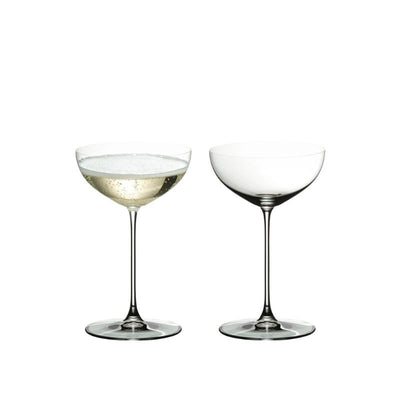
The Riedel Veloce English Sparkling Wine glass has just landed at The Riedel Shop. It is, as far as we know, the only wine glass in the world developed specifically for a single country's sparkling wine.
Why?
It starts with Maximilian Riedel and twenty-five of England's leading producers, working through twelve different glass shapes to find the one that does justice to what English sparkling wine has become. Not what it was ten years ago.
What it is now.
And what it is now, if the world's most rigorous blind tasting competitions are any guide, is one of the genuinely great sparkling wine categories on the planet. Back-to-back Best in Show at Decanter World Wine Awards. Platinum medals in counties that have never won one before. Independent experts, judging blind, saying English sparkling wine is every bit as good as most Champagne.
A glass that specific does not get made for a category that does not deserve it.
Here's why English sparkling wine does.
Key takeaways
- English sparkling wine is made on the same chalk geology as Champagne, from the same grape varieties, in a climate structurally well-suited to producing high-acidity, age-worthy fizz.
- At Decanter World Wine Awards 2026 - the world's largest blind tasting with nearly 17,000 wines - an English sparkling wine won Best in Show for the second year running.
- UK production hit 21.6 million bottles in 2023, a 130% increase since 2017. 68% is sparkling.
- The category is diversifying: still wines, orange wines, and new varieties are emerging alongside the core sparkling identity.
- Riedel developed a dedicated glass for English sparkling wine - the Veloce English Sparkling Wine glass - in collaboration with 25 leading UK producers.
- Climate change has refined rather than undermined English wine's advantages: more reliable harvests without losing cool-climate acidity.
In this article
The chalk beneath the feet
Start with the ground.
The chalk and limestone that define the great Champagne vineyards of Reims and Epernay do not stop at the French coast. The same geological band runs beneath the Channel and re-emerges across the North Downs, the South Downs, and through Kent, Sussex, and Hampshire. It is the same rock. The same soil chemistry. The same capacity to retain moisture, reflect warmth, and lend wines that mineral, almost saline precision that makes great sparkling wine electric on the palate.
This is not a convenient coincidence that the English wine industry has learned to talk about. It is the structural reason why the south of England produces sparkling wine of world-class quality - and why the comparison to Champagne is not flattery, but geography.

Worth knowing: Chalk is free-draining but moisture-retentive. It draws vine roots deep in search of water, producing smaller, more concentrated berries. It reflects heat back into the canopy, aiding ripening without tipping into overripe, heavy fruit character. The South Downs, the North Downs, and much of Hampshire sit on the same chalk geology as the Côte des Blancs in Champagne - which is why Chardonnay grown in both places can taste, in blind tastings, remarkably similar.
The Champagne grape varieties - Chardonnay, Pinot Noir, and Pinot Meunier - now account for 68% of all English plantings. Producers chose them not because they were the obvious marketing move, but because they are the varieties best suited to what this land and climate can offer. Two decades of results have confirmed the choice.
Cool climate, warm ambition
English sparkling wine's other natural advantage is the one that used to be cited as its problem: the weather.
Cool climates slow ripening. Extended growing seasons allow flavour complexity to develop gradually, while the grapes retain high natural acidity. That acidity is the backbone of great sparkling wine. It is what gives the wine its freshness, what allows it to age, and what makes the mousse feel clean and persistent rather than heavy and short. In warmer climates, that acidity has to be managed artificially. In England, it is simply what the weather provides.
Climate change has refined rather than undermined this advantage. Research from the University of East Anglia shows the UK's growing season has warmed by over 1°C since the 1980s - enough to push more vintages into reliable ripening territory without losing the cool-climate character that defines the style. The English sparkling wine sweet spot - cool enough for acidity, warm enough for ripeness - has become more consistently achievable, and the wines have improved accordingly.
The producers who built the category
Terroir is only potential. What producers do with it is the actual story.
The modern English sparkling wine industry was built by a handful of pioneers willing to invest seriously in a category that did not yet have a proven market. Nyetimber was the first to plant exclusively Champagne varieties and commit entirely to traditional-method sparkling wine. Ridgeview, Hambledon, and Chapel Down followed. What they established -- that English sparkling wine could be made with the same rigour as Champagne and produce wines of comparable quality -- is now taken as a given.
The counties that matter most are Sussex, Kent, and Hampshire, in that order of establishment if not necessarily of quality. The South Downs, the Weald, and Hampshire's chalk-rich interior have each developed distinct characters. Balfour, based in the Weald, took Best in Show at Decanter World Wine Awards 2026 with a magnum of Blanc de Blancs from Kent. That is not a county anyone would have predicted producing a world-beating sparkling wine twenty years ago. The map keeps expanding -- Berkshire won its first Platinum at Decanter in 2026, and Oxfordshire is not far behind.
Beyond sparkling: a category growing up
English sparkling wine built the category. English still wine is beginning to complicate it -- in the best possible way.
At the 2026 WineGB Awards, judges described the diversity on show as "exponentially growing" -- skin-contact Bacchus, Gamay rosé, disease-resistant varieties alongside the core sparkling range. Sussex entered the Platinum tier at Decanter with a still Chardonnay for the first time.
"What's always so exciting is how innovative the English wine scene can be because there are very few rules and regulations that you might have in traditional wine producing regions." - Susie Barrie MW, co-chair, WineGB Awards 2026
Sussex, long synonymous with sparkling wine, entered the Platinum tier at Decanter 2026 with a still wine for the first time: Tidebrook's Staddle Stone Chardonnay 2023. The freedom available to English producers - no appellation rules, no mandated varieties, no prescribed methods - is increasingly being used with genuine creativity.
This matters for the long-term identity of English wine. A category defined entirely by its sparkling output, however good, is a narrow category. One that encompasses a recognisable range of still wines, orange wines, and experimental styles alongside its core product is a category with genuine depth.
That depth is what English wine is starting to have.
English sparkling vs English still: what's changed
Five years ago, still wines from English vineyards were largely an afterthought - bought when they had run out of the sparkling. Today, Bacchus is establishing itself as England's signature white variety, English Chardonnay is winning Platinum medals, and Pinot Noir is producing wines of genuine interest. The still wine category is not yet as consistently strong as the sparkling - but the gap is closing, and closing fast.
The proof, if you need it
For those who prefer evidence to argument, the 2026 competition season has provided it in some quantity.
At Decanter World Wine Awards - nearly 17,000 wines, 245 expert judges, 63 Masters of Wine - an English sparkling wine claimed Best in Show for the second consecutive year. The winner, Balfour Blanc de Blancs Kent 2018, was entered in magnum format: the kind of choice that signals long-term ageing intent rather than early-release freshness. It is the kind of wine that serious Champagne houses make. It is made in Kent.
"The sparklers are every bit as good as most Champagnes and the still wines, once an after-thought, are genuinely interesting and thoughtfully made." - Simon Field MW, Regional Chair for England and Wales, DWWA 2026
Neither of the quotes above comes from the English wine industry. They come from independent experts, judging blind. That is the point.

Drinking it properly: the Veloce glass
Quality in the glass depends partly on what you drink it from.
In 2023, Maximilian Riedel worked with 25 leading English sparkling wine producers across Hampshire, Kent, and Sussex to identify the optimal vessel for these wines. The process involved blind tastings across twelve different Riedel glass shapes alongside a broad range of English sparkling wines. The unanimous conclusion was the Riesling shape from the Veloce range: wider than a conventional flute, shaped to open up the aromatic complexity of cool-climate sparkling wine, with a nucleation point added to manage the mousse.
A conventional flute was designed to preserve bubbles and showcase colour - at the cost of aromatic expression. The narrow opening suppresses the top notes that make cool-climate sparkling wine interesting. The Veloce English Sparkling Wine glass addresses that directly.
"I have long admired English Sparkling Wines... I have seen the industry grow and the wine develop to a truly internationally high standard, so that it is amongst the very best sparkling wines in the world." Maximilian Riedel, CEO, Riedel
The Veloce range uses machine-made technology to produce glasses as fine and well-balanced as hand-made equivalents: genuinely thin-walled, properly balanced in the hand, and designed without shortcuts. The English Sparkling Wine glass is now the definitive vessel for a category that has earned its own glassware - in the same way that Bordeaux, Burgundy, and Chablis each have their own shapes.
If you are drinking English sparkling wine seriously, this is the glass to do it in.
And after the 2026 results, there is every reason to drink it seriously.
ESW does not need defending anymore.
It needs drinking. Ideally soon, ideally well-chilled, and ideally from the right glass.
And you now know which one that is.
The Riedel Veloce English Sparkling Wine glass was developed with 25 of England's leading producers to bring out the best in home-grown fizz. Now in stock at The Riedel Shop.
Shop the Veloce English Sparkling Wine glassFrequently asked questions
Is English sparkling wine as good as Champagne?
In blind tastings, repeatedly, yes. English sparkling wines have beaten Champagnes in major international competitions since at least 2004, and in 2026 an English wine claimed Best in Show at Decanter World Wine Awards -- a field of nearly 17,000 wines judged blind by 245 experts. English sparkling wine and Champagne share the same geological foundation, the same grape varieties, and the same production method, but are not identical wines. English examples tend toward higher acidity and a slightly leaner, more mineral character. Whether that is better or worse is a matter of preference -- but it is no longer a matter of quality.
What grapes are used in English sparkling wine?
The majority is made from Chardonnay, Pinot Noir, and Pinot Meunier -- the same three varieties used in Champagne. Chardonnay accounts for 31% of total English plantings, Pinot Noir 29%, and Pinot Meunier 9%. Chardonnay-dominant wines tend toward citrus, white stone fruit, and chalk mineral character. Pinot-led wines add structure, red fruit, and body. Both Blanc de Blancs (100% Chardonnay) and Blanc de Noirs (100% black grapes) styles are well-established in the English category.
Which English regions produce the best sparkling wine?
Sussex and Kent are the most established, with the South Downs and the Weald consistently producing top-ranked wines. Hampshire is close behind, with chalk-rich soils and a slightly drier, warmer microclimate. Beyond the traditional heartland, Berkshire won its first Platinum medal at Decanter 2026, and Oxfordshire is producing medal-winning wines. The map continues to expand northward and westward as both climate and producer knowledge improve.
Can English sparkling wine age?
Yes -- and increasingly, producers are making wines with ageing explicitly in mind. The Best in Show winners at Decanter in both 2025 and 2026 were magnums, a format associated with superior ageing potential. Balfour's Blanc de Blancs Kent 2018, the 2026 winner, was released with several years of bottle age already behind it. High natural acidity and chalk-derived minerality give English sparkling wines the structure to develop well over five to fifteen years from vintage.
Is English sparkling wine made the same way as Champagne?
The best English sparkling wines use the traditional method -- the same process used in Champagne -- in which the secondary fermentation that creates the bubbles takes place in the bottle rather than in a tank. The wine then ages on its lees (the spent yeast cells) in the bottle, developing the biscuity, brioche-like complexity that characterises both Champagne and fine English sparkling wine. This is more labour-intensive and expensive than tank fermentation, but produces wines with greater complexity and ageing potential.
How should I serve English sparkling wine?
Serve at 8 to 10°C -- cold enough to keep the wine fresh and manage the bubbles, but not so cold that the aromatics are closed down. Pour gently rather than aggressively, and give the wine a minute in the glass before drinking. The best English sparkling wines have enough aromatic complexity to reward a little patience.
Why does the glass matter for English sparkling wine?
A conventional flute preserves bubbles and showcases colour, but suppresses aromatic expression -- precisely what makes cool-climate sparkling wine interesting. The Riedel Veloce English Sparkling Wine glass uses a wider, Riesling-derived bowl shape to open up the aromatics, with a nucleation point to keep the mousse lively. The shape was chosen through blind tastings with 25 leading English producers using the same glass-development process Riedel applies to every major wine category.
What is Bacchus wine?
Bacchus is the grape variety that has emerged as England's signature still white wine, accounting for around 8% of English plantings. It produces wines with vibrant citrus notes, aromatic florals -- think elderflower, gooseberry, and a hint of fresh herb -- and zesty acidity. It is England's answer to Sauvignon Blanc, and in good vintages from quality producers it can be genuinely excellent.
How much does English sparkling wine cost?
Quality English sparkling wine typically starts at around £20-25 a bottle for entry-level non-vintage wines, rising to £35-60 for vintage and prestige cuvées from leading producers. Magnums and older vintages command premium prices. That puts the better examples in the same bracket as good Champagne -- which is an accurate reflection of the production costs involved.
Is English wine only sparkling?
No, though sparkling wine makes up around 68% of production. English still wines -- particularly Bacchus, Chardonnay, and Pinot Noir -- are improving rapidly and gaining international recognition. At Decanter World Wine Awards 2026, Sussex entered the Platinum tier with a still wine for the first time. The category also now includes skin-contact wines, rosé, and experimental styles from disease-resistant grape varieties.
What is the Riedel Veloce English Sparkling Wine glass?
The Riedel Veloce English Sparkling Wine glass is a purpose-designed vessel developed in 2023 through a collaboration between Maximilian Riedel and 25 leading UK producers. The shape is based on Riedel's Riesling bowl -- wider than a flute, with a form that opens up the aromatic complexity of cool-climate sparkling wine -- with a nucleation point added to manage the mousse. It is part of the Veloce range, which uses machine-made technology to produce glasses as fine and well-balanced as hand-made equivalents.
Why has English wine improved so much recently?
A combination of factors: a growing season that has warmed by over 1°C since the 1980s (producing more reliable ripening without losing cool-climate acidity), significant investment from major Champagne houses and institutional backers, trained winemakers who have brought technical knowledge from Champagne and elsewhere, and two decades of learning what English terroir can achieve. The pioneers who planted in the 1980s and 1990s established the proof of concept; the producers who followed have had the benefit of that groundwork and the freedom to push further.


Leave a comment