



Buy British Day: What Should Be in Your Glass

Andi Healey
Web Manager

From English sparkling wine and English whisky to gin, Scotch and the new generation of British spirits, there has never been a better time to drink closer to home.
Today is Buy British Day and there are plenty of ways to wave the flag.
You could breakfast on toasted Warburtons bread, with Marmite and Yorkshire Tea. Have a quick clean up with Henry the Hoover, with The Beatles blaring out of your Wharfdale speakers, before slipping on your Dr. Martens boots and John Smedley jumper and venturing out to push your Hayter lawnmower round the garden.
Or you could do the sensible thing and open a bottle.
Britain has never been short of drinks, obviously. We've been distilling, brewing and fermenting things for centuries. But what's interesting now is the sheer variety of genuinely British drinks available to us.
English wine has gone from eccentric curiosity to a serious part of the wine industry. English Whisky has just joined Scotch and Welsh Whisky and been granted protected Geographical Indication status. Scotch has been one of Britain's great exports for generations. And the British gin industry has spent the last couple of decades proving that juniper can be accompanied by practically anything that grows in a herb garden.
So, if Buy British Day is going to involve a drink, what should be in the glass?
TL;DR
- English wine is no longer a patriotic indulgence: more than 16.5 million bottles were produced across the UK in 2025.
- It isn't all fizz. Still wines made up 56% of entries at the 2026 WineGB Awards.
- Scotch has a legal definition, and almost nine in ten bottles are blends. You don't need to spend £150 on a single malt.
- English Whisky has protected Geographical Indication status as of 1st October 2026, alongside Scotch and Welsh Whisky.
- A bottle of gin can be British-made without every ingredient being British. What matters is knowing what you're buying.
Start with English wine
This is the obvious one, but it is no longer a patriotic indulgence to suggest drinking English wine.
WineGB reports that more than 16.5 million bottles of wine were produced across the UK in 2025, with 1,158 vineyards registered with the Food Standards Agency.
And yes, sparkling wine still dominates the story.
More than 90% of UK sparkling wine is made using the traditional method, the same broad production method used in Champagne.
Chardonnay, Pinot Noir and Pinot Meunier are the principal varieties, although English and Welsh producers are increasingly experimenting with other grapes and styles.
The important bit is that you don't need to treat English sparkling wine as a British substitute for Champagne.
It has its own character.
The cooler climate and long growing season can produce wines with pronounced freshness and acidity, and the best examples have developed a style that is recognisably their own.
And there is another useful reason to buy English or Welsh wine* on Buy British Day: you're supporting an agricultural industry rather than simply choosing a British brand on a bottle.
That's quite a difference.
* Unfortunately, Scotland does not produce traditional grape wine at a commercial scale.
And it's not all sparkling
This is probably the most interesting development.
For years, “English wine” effectively meant “English sparkling wine”. That is becoming an increasingly outdated description.
WineGB's 2026 awards showed still wines accounting for 56% of entries, with still wines representing more than half of the medal-winning wines for the second consecutive year.
Bacchus is the obvious grape to look out for, producing aromatic white wines that have become something of a signature for English producers.
There are also English rosés, Pinot Noirs, Chardonnays and a growing collection of more experimental wines.
In other words, don't buy one bottle of English fizz and decide you've ticked the box.
There's rather more going on than that.

Then there's Scotch
If we're talking about British drinks, we have to talk about Scotch Whisky.
One of Britain's great drinks exports, and its geographical identity is not simply marketing.
Scotch Whisky has a legal definition. It must be made, matured and bottled according to specific requirements, including being produced and matured in Scotland for at least three years.
There are five recognised categories of Scotch Whisky, from Single Malt and Single Grain through to the various blended categories.
And this is worth remembering when someone tells you that blended whisky is somehow inferior.
Almost nine out of ten bottles of Scotch consumed around the world are Blended Scotch Whiskies. Blending is not a way of disguising bad whisky. It is a skilled part of the Scotch whisky tradition.
So, if your Buy British Day involves Scotch, you don't have to spend £150 on a single malt.
A good blend can be every bit as rewarding.
English whisky has arrived
Here's the bit that would have sounded slightly ridiculous not very long ago.
English Whisky now has protected Geographical Indication status, as of 1st October 2026.
The UK Government announced the new protected status, recognising English Whisky as a distinct category produced across England, from Cornwall to Northumberland.
That's quite a change from the days when English whisky was something most people knew existed only because somebody at the pub had brought it up.
There are now distilleries producing whisky in very different styles and with very different approaches.
It also makes the word “British” rather more interesting.
Scotch is British.
English Whisky is British.
Welsh Whisky is British (and is really rather good).
But they're not the same thing, and the fun is in tasting the differences.
And then there's gin
Britain's relationship with gin is complicated, historic and occasionally involves laws being passed because people were drinking rather too much of it.
The modern gin industry is somewhat more respectable.
Gin itself is not exclusively British, of course. Its definition is based on what the spirit is made from and how it is flavoured, rather than where it was produced. It must have juniper as its predominant flavour and a minimum strength of 37.5% ABV.
But Britain has made gin its own.
London Dry Gin remains one of the best-known styles in the world, while the modern British gin boom has produced everything from intensely traditional juniper-led spirits to gins flavoured with local herbs, fruits, spices and botanicals.
And this is where buying British becomes slightly more difficult.
A bottle can be British-made without every ingredient being British.
Juniper, for example, doesn't magically become English because the gin it ends up in has been distilled in Surrey.
That's not a problem. It's just how drinks work.
Very few modern food and drink products are completely domestic from raw material to packaging. What matters is understanding what you're actually buying.
What about British rum, vodka and other spirits?
This is where the Buy British list gets longer… and longer.
There are British producers making rum, vodka, liqueurs and other spirits, often using imported raw materials but distilling, ageing, blending or bottling them here.
Some are traditional. Some are experimental. Some are very good.
And that last category is the one I'm interested in.
Buy British Day doesn't need to mean buying something simply because it has a Union Jack on the label.
There is a much better reason to buy it.
Because you actually want to drink it.
The glass matters too
There is one slightly awkward problem with writing an article about British drinks for The Riedel Shop.
Riedel is Austrian.
So we're not going to pretend otherwise.
But that's actually part of the point.
Buy British Day doesn't have to mean pretending everything you own, eat or drink was produced within fifty miles of your front door.
Britain has always depended on international trade, imported ingredients, ideas, equipment and expertise.
And wine itself is an international language.
What we can do is choose British where British producers are making something worth buying.
Then give it the glass it deserves.
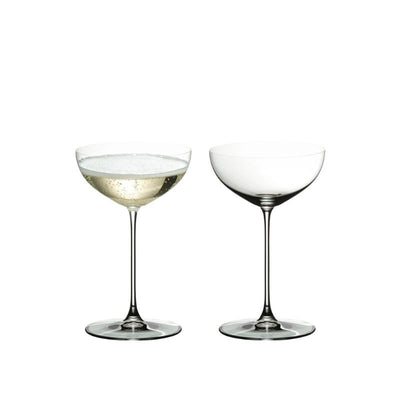
English sparkling wine benefits from the same basic principle as any other sparkling wine: the shape of the glass affects how the wine reaches your nose and palate. A proper sparkling wine glass gives the aromas somewhere to collect while retaining the visual and aromatic character of the wine.
The same applies to English Chardonnay, Bacchus, Pinot Noir or an English whisky.
Buying British is one decision.
Drinking it properly is another.
So what should you drink today?
If you're after something celebratory, open a bottle of English or Welsh traditional-method sparkling wine.
If you want something different, try an English still wine. Bacchus is a great starting point, but English Pinot Noir and Chardonnay are increasingly worth exploring, and the White Castle Cabernet Franc, from Abergavenny, is exceptional.
If spirits are more your thing, try blind tasting an English or Welsh Whisky alongside a Scotch and see what you think.
Or make a British gin and tonic.
Preferably in a proper glass.
And if you really want to commit to the theme, invite some friends round, put several bottles on the table and conduct a completely unscientific tasting of British drinks.
No judging sheets.
No scores out of 100.
No one needs to describe the Bacchus as “an expression of the terroir”.
Just drink the stuff.

That's the nice thing about Buy British Day.
You don't have to buy everything British.
But, increasingly, there is rather a lot that's worth it.
British drinks deserve
a proper glass
English fizz, a good Scotch or a proper gin and tonic.
The right shape lets you smell and taste what you paid for.
Find your glassQuick answers
What is the difference between English wine and British wine?
English wine is made from grapes grown in England, and Welsh wine from grapes grown in Wales. “British wine” is a trade term for wine made in the UK from imported grape juice or concentrate, so the grapes themselves aren't British.
Does English Whisky have protected status?
Yes. Defra announced Geographical Indication status for English Whisky on 11 September, and it is on the UK register from 1st October 2026. The specification requires UK-grown cereal grain and English water. Welsh whisky's protection covers Single Malt Welsh Whisky specifically.
Is blended Scotch worse than single malt?
No. “Blended” describes how the whisky is made, not how good it is. Almost nine in ten bottles of Scotch drunk around the world are blends, and a good one can be every bit as rewarding as a single malt.
Is gin really a British drink?
Gin's definition is about what it's made from and how it's flavoured, not where it's made. It must have juniper as its predominant flavour and be at least 37.5% ABV. Britain has made it its own, but a British-made gin can still use imported ingredients.
The Riedel Shop is the UK's premier specialist retailer of Riedel wine glasses, with over 10 years of experience helping customers understand and appreciate quality wine glassware. Part of the Art of Living Cookshop family (established 1972 in Reigate, Surrey), we combine practical retail experience with genuine passion for wine culture. Visit our physical stores in Cobham and Reigate, or browse our full range online.


Leave a comment