



The science of glass shape: what the research actually says and what it means for service

Andi Healey
Web Manager
Hospitality trade • Glassware & service
The science of glass shape: what the research actually says and what it means for service
The physics and chemistry behind bowl geometry, ethanol vapour, and why the right glass is a service decision rather than an aesthetic one.
In 2015, researchers at Tokyo Medical and Dental University used vapour-imaging technology to demonstrate what glassware designers had long argued: bowl shape determines where ethanol vapour concentrates in a glass, and that separation directly affects how wine aromas reach the nose. The research put a measurable, observable mechanism behind what had previously been a claim backed mainly by comparative tasting.
This article covers the science, the four structural elements of a glass and what each contributes, the key shape distinctions for red and white wine service, and an honest account of where stemless glasses are and are not appropriate.
The ethanol vapour research
The intuition that glass shape affects wine has existed since Claus Riedel began developing varietal-specific shapes in the 1950s. The mechanism, however, was not visualised until 2015, when scientists at Tokyo Medical and Dental University developed a camera system capable of imaging ethanol vapour escaping from wine glasses at serving temperature.
What they found was significant. At approximately 13°C, ethanol vapour concentrates around the rim of the glass in a ring pattern, while the centre of the bowl remains relatively free of it. This matters because ethanol vapour at the nose suppresses the perception of aromatic compounds: the burn of alcohol competes with and partially masks the wine's aromatics. A glass shape that keeps ethanol at the rim and allows aromatic compounds to concentrate in the centre of the bowl delivers a meaningfully cleaner aromatic experience.
The research also confirmed that this effect is shape-dependent. Different bowl geometries produce different vapour distribution patterns. A poorly shaped glass can collapse the separation, allowing ethanol to dominate the centre of the bowl and obscure the aromatics the winemaker spent considerable effort producing.
On the tongue map
The longstanding model of taste perception, which suggested that different areas of the tongue detect different tastes, has been substantially revised by modern neuroscience. Taste receptors are distributed across the tongue rather than confined to zones, and smell accounts for the dominant share of what we experience as flavour. This reinforces rather than undermines the case for proper glassware: if most of what we call taste is actually smell, then anything that affects aroma delivery affects the entire tasting experience.
"For a customer to have a different glass for red Burgundy, versus Napa Cab, versus Bordeaux, it's a luxury. But I believe it makes a drastic difference to the experience of the wine." Andrew Rastello, assistant wine director, Eleven Madison Park.
The four structural elements
Every wine glass is a combination of four components. Each has a function, and compromising any one of them has a measurable effect on the experience.
The base
Stability. Larger-bowled glasses have a higher centre of gravity and need a proportionally wider base. Relevant in service contexts where tables are busy and glasses are tall.
The stem
Prevents hand heat from warming the bowl and keeps hand scents away from the nose. Both matter: temperature is a service standard, and aromatic interference is more significant than it sounds when the wine is delicate.
The bowl
Determines surface area, aeration rate, and where ethanol vapour concentrates relative to aromatic compounds. The bowl is where the design work happens. Fill to no more than a third to allow proper swirling without loss.
The rim
Thinner rims reduce physical interference between glass and palate, affecting how wine is delivered into the mouth. Fine crystal rims are not purely aesthetic: they are part of the functional specification.
Red wine glass shapes
Red wine glasses are larger than white wine glasses for two related reasons: tannic reds benefit from oxygen exposure to soften their structure, and the greater distance between the wine surface and the nose allows ethanol vapour to dissipate before reaching the nose.
Bordeaux / Cabernet glass
The tallest of the standard red shapes, with a large bowl and a moderate taper. The height maximises the distance between wine and nose, allowing ethanol to dissipate. The wide surface area gives bold, tannic reds room to aerate, softening tannin perception and allowing fruit to come forward. The wider opening also reduces the perception of bitterness, which is the primary service advantage with high-tannin varieties.
Best suited to: Cabernet Sauvignon, Merlot, Cabernet Franc, Bordeaux blends, Malbec, and most full-bodied New World reds.
Burgundy / Pinot Noir glass
Wide, balloon-shaped bowl with a more pronounced taper than the Bordeaux glass. The large surface area encourages maximum aeration for wines whose aromatic profile is delicate and slow to open. The tapered rim then concentrates those aromas toward the nose efficiently. Some versions have a slightly outturned lip that deposits wine at the tip of the tongue first, leading with fruit character before acidity registers.
As a general principle: a wider opening reduces the impact of dominant aromas, while a narrower opening concentrates subtler ones. This is why the Burgundy glass suits Pinot Noir specifically: it needs both maximum aeration and precise aromatic focus.
Best suited to: Pinot Noir, Gamay (Cru Beaujolais), Valpolicella blends, Nebbiolo, lighter Grenache.
White wine glass shapes
White wine glasses are smaller than red wine glasses. The reduced bowl size limits surface area exposure, preserving delicate aromatic compounds that dissipate quickly with oxygen contact. The smaller bowl also helps maintain temperature: white wines are served cooler and a larger bowl warms more quickly in a warm dining room.
Standard white wine glass
The workhorse of white wine service. A medium bowl, moderate taper, and narrower opening than the red wine equivalents. Works well across most white varieties served at standard temperatures. The proximity of the narrower opening to the nose at serving temperature increases aroma delivery even when the aromatic compounds are less volatile due to cooler serving temperatures.
Best suited to: Sauvignon Blanc, Riesling, Pinot Grigio, Grüner Veltliner, unoaked Chardonnay, Albariño.
Oaked Chardonnay / Montrachet glass
A larger bowl than the standard white glass, resembling a scaled-down Burgundy shape. Full-bodied, oak-aged whites develop secondary aromatics that require more air contact to express: butter, toast, vanilla, hazelnut. The wider bowl gives those compounds room to develop, while the still-narrower opening compared to the Burgundy glass preserves freshness and directs wine to the mid-palate where the balance of fruit, oak, and acidity is best appreciated.
The bowl also allows for slight warming in service, which is appropriate: oaked whites served too cold compress the aromatic complexity they were designed to display.
Best suited to: Oaked Chardonnay, white Burgundy, white Rioja, fuller-style Pinot Gris, orange wines, richer Chenin Blanc.
Stemmed vs. stemless
Stemless glasses have functional advantages that make them appropriate in specific service contexts. The question is not which format is superior but which is correct for the occasion.
| Consideration | Stemmed | Stemless |
|---|---|---|
| Temperature control | Stem prevents hand heat reaching bowl | Hand contact warms the wine; significant for whites and sparkling |
| Aroma integrity | Hand scents kept away from bowl and nose | Hand contact can introduce aromatic interference |
| Swirling | Stem provides leverage and control | More difficult; less surface agitation achieved |
| Durability | Stem is the most common breakage point | Considerably more robust; better suited to high-turnover settings |
| Storage | Requires more vertical clearance | Stacks more efficiently; dishwasher-compatible in most cases |
| Formality | Expected at tastings, fine dining, formal occasions | Appropriate for casual settings, outdoor service, standing events |
For fine wine, particularly whites and sparkling wines where temperature and aroma integrity are central to the experience, stemmed glasses are the correct choice. For red wines served at room temperature in informal settings, stemless glasses are a practical compromise that does not significantly diminish the experience. Maintaining both formats and deploying each in its appropriate context is the practical approach for most operations.
What this means for service decisions
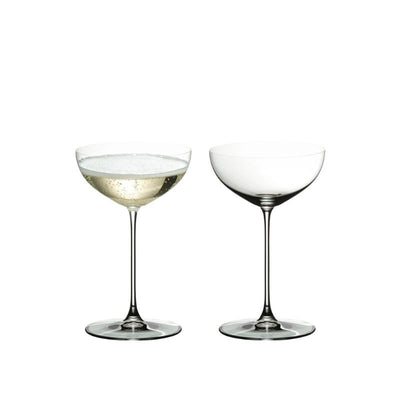
The research supports what experienced service professionals already know from practice: glass shape affects the wine's presentation. It does not require a different glass for every grape variety to make a meaningful difference. The practical minimum is three shapes: a larger-bowled red glass, a white glass, and a tulip or white-wine glass for sparkling wine.
Variety-specific glasses earn their place for wines served in volume where the shape difference is demonstrable to guests. A Pinot Noir served in a Bordeaux glass loses the aromatic focus that the Burgundy bowl provides. A high-tannin Cabernet in a smaller glass presents harsher than it should. These are not marginal differences in a fine dining context.
The conversation with a sceptical guest
When a guest questions whether the glass matters, the useful response is the ethanol vapour finding: the bowl shape determines whether alcohol burn or wine aroma reaches the nose first. It is physics rather than preference. Most guests find this a more convincing explanation than being told the glass enhances the wine, which they may reasonably interpret as marketing language.
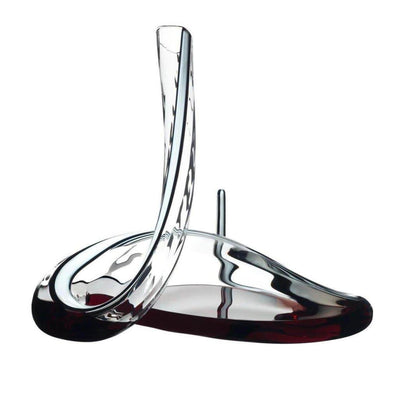
Decanting is a separate but related point. Regardless of glass choice, decanting remains one of the most effective ways to improve a wine's presentation in service. The increased surface area in a decanter accelerates aeration considerably more than swirling in a glass can achieve. For young, tannic reds, the improvement can be significant enough to change how a guest perceives the wine.
The glass does not change what is in the bottle. It determines how much of it the guest actually experiences.


Leave a comment