



Everything You Need to Know About Sparkling Wine (And Why Champagne Isn't the Only Option)

Andi Healey
Web Manager
 Sparkling wine gets wheeled out for celebrations, toasts, and special occasions, then promptly forgotten about until the next time someone gets engaged or it's New Year's Eve.
Which is a shame, because sparkling wine is brilliant with food, works in situations where still wine falls flat, and there's a whole world of it beyond Champagne that most people never explore.
So let's talk about what sparkling wine actually is, how it's made, why it works so well, and most importantly, which ones are worth your money.
Key Takeaways: Sparkling Wine
- Sparkling wine works brilliantly with food because high acidity and bubbles cut through richness and refresh your palate
- The British invented sparkling Champagne nearly 30 years before the French, thanks to stronger glass and cork stoppers
- Champagne, Cava, and English sparkling use traditional method (second fermentation in bottle) whilst Prosecco uses tank method
- Pressure in a Champagne bottle is nearly twice that of a car tyre – around 5-6 atmospheres
- Quality varies massively – look for Brut Nature Cava, DOCG Prosecco, or Blanc de Blancs Champagne for food pairing
- Red sparkling wines exist – Italian Lambrusco and Australian sparkling Shiraz are worth trying
- The right glass matters – egg-shaped glasses show flavour better than tall flutes
In This Guide
- What Actually Is Sparkling Wine?
- The Surprising History of Bubbles
- How Sparkling Wine Is Made
- Champagne: Why It's Different
- Cava: Spain's Brilliant Value Option
- English Sparkling Wine: The New Contender
- Prosecco: What You Need to Know
- Other Sparkling Wines Worth Trying
- The Science of Bubbles
- Why Sparkling Wine Works With Food
- Frequently Asked Questions
What Actually Is Sparkling Wine?
Sparkling wine is wine with bubbles. That's it. The bubbles come from carbon dioxide dissolved in the wine under pressure.
Most sparkling wines are white or rosé, though there are red sparkling wines (Italian Lambrusco and Brachetto, Australian sparkling Shiraz) that work surprisingly well with certain foods.
The sweetness ranges from bone-dry "Brut Nature" (almost no sugar) through to sweet "Doux" styles. The terms come from French: Brut means "raw" or "harsh," whilst Doux means "soft" or "sweet."
How the Bubbles Get There
The sparkling quality comes from one of three methods:
Traditional method (méthode traditionnelle) involves a second fermentation happening inside the bottle you eventually drink from. This is how Champagne, Cava, and English sparkling wine are made. It's time-consuming and expensive, but produces the finest bubbles and most complex flavours.
Tank method (Charmat method) involves the second fermentation happening in large pressurised tanks before bottling. This is how Prosecco is made. It's faster and cheaper, and produces lighter, fruitier wines with larger bubbles.
Carbon dioxide injection is exactly what it sounds like - pumping CO2 into still wine. This produces the cheapest sparkling wines with the largest, least persistent bubbles. Avoid these.
Pressure Levels in Sparkling Wine
Fully sparkling: 5-6 atmospheres (Champagne, Cava, most quality sparklers). Nearly twice the pressure in a car tyre.
Semi-sparkling: 1-2.5 atmospheres (Italian Frizzante, French Pétillant, German Spritzig). Lighter fizz, less aggressive bubbles.
EU definition: Anything over 3 atmospheres counts as sparkling wine.
The Surprising History of Bubbles
Effervescence in wine has been observed since Ancient Greece and Rome, but nobody understood what caused it. Over the centuries, it was blamed on everything from phases of the moon to evil spirits.
In the Middle Ages, winemakers in Champagne noticed their wines would sometimes sparkle slightly. This was considered a fault. Dom Pérignon, the Benedictine monk everyone credits with "inventing" Champagne, was actually tasked with getting rid of the bubbles because the pressure kept exploding bottles in the cellar.

In the early 18th century, when deliberate sparkling wine production increased, cellar workers wore heavy iron masks (resembling baseball catcher's masks) to protect themselves from exploding bottles. One bottle exploding could trigger a chain reaction, and cellars routinely lost up to 90% of their stock to instability.
The mysterious fermentation process led some critics to call sparkling wine "The Devil's Wine." (I'm sure it's earned that name on many a morning after in households everywhere.)
The British Actually Invented Sparkling Champagne
Here's where it gets interesting: the British were the first to see sparkling wine as desirable rather than a fault.
Wine from Champagne was often shipped to England in wooden barrels, where merchants would bottle it for sale. During the 17th century, English glass production used coal-fuelled ovens, which produced much stronger, more durable bottles than the wood-fired French glass.
The English also rediscovered cork stoppers (used by the Romans but forgotten after the fall of the Western Roman Empire). During Champagne's cold winters, fermentation would stop prematurely, leaving residual sugar and dormant yeast in the wine.
When the wine was shipped to England and bottled with cork stoppers, warmer weather would restart fermentation. The yeast consumed the remaining sugar, producing carbon dioxide that couldn't escape the sealed bottle. When opened, the wine was bubbly.
In 1662, English scientist Christopher Merret presented a paper explaining how sugar in wine created sparkle, and that adding sugar to wine before bottling could make nearly any wine sparkle. This is one of the first documented accounts of understanding the process, suggesting British merchants were producing "sparkling Champagne" almost 30 years before the French were doing it deliberately.
"I only drink champagne when I'm happy, and when I'm sad. Sometimes I drink it when I'm alone. When I have company, I consider it obligatory. I trifle with it if I am not hungry and drink it when I am. Otherwise I never touch it—unless I'm thirsty."
— Lily Bollinger, former manager of Bollinger Champagne
How Sparkling Wine Is Made
The traditional method (used for Champagne, Cava, English sparkling) involves several stages:
First, you make a base wine – usually quite acidic and not particularly pleasant on its own. Then you add a mixture of sugar and yeast (called the liqueur de tirage) and bottle it with a crown cap.
The yeast consumes the sugar, producing alcohol and carbon dioxide. Because the bottle is sealed, the CO2 dissolves into the wine under pressure. This second fermentation takes weeks to months.
After fermentation, the dead yeast cells (lees) sit in the bottle for months or years, adding complexity – biscuity, brioche-like flavours that distinguish quality sparkling wine from cheap fizz.
Eventually, the bottles are gradually tilted and rotated (traditionally by hand, nowadays often by machine) until the lees collect in the neck. The neck is frozen, the cap removed, and the pressure shoots out the frozen plug of sediment. A small amount of wine mixed with sugar (dosage) is added to replace what was lost, and the bottle is corked.
It's labour-intensive and expensive, which is why traditional method sparkling wines cost more.
Champagne: Why It's Different
Champagne is produced at the extreme northern limit of where grapes can ripen. The growing season is long and drawn-out, and the grapes struggle to reach full ripeness. This sounds like a problem, but it's actually what makes Champagne special.
The cool climate and chalky limestone soil produce grapes with a particular balance of acidity and subtle fruit character that's difficult to replicate elsewhere. The Champenois are fiercely protective of the Champagne name, and since 1985, it's been illegal to use terms like "Champagne method" or "Champagne style" for wines produced outside the region.

The Champagne Blend
Blending is the hallmark of Champagne. There are over 19,000 vineyards in Champagne, but only 5,000 are owned by Champagne producers. The rest sell their grapes to the big houses, négociants, and co-operatives.
Three grapes dominate: Chardonnay (white), Pinot Noir (red), and Pinot Meunier (red). Yes, most Champagne is made from red grapes – the juice is pressed gently before the skins can colour it.
Each grape brings something different. Chardonnay provides finesse, elegance, and ageing potential. Pinot Noir adds body, structure, and red fruit character. Pinot Meunier contributes aromatics, particularly floral and fruity notes.
Most Champagne is non-vintage (NV), meaning it's blended from multiple years to maintain a consistent house style. Vintage Champagne is only produced in exceptional years when the grapes have enough complexity and character to stand alone without blending across vintages. It's usually a house's most expensive and prestigious wine.
Blanc de Blancs (white from whites) is Champagne made entirely from Chardonnay. It's more delicate, citrusy, and mineral – excellent with food.
Blanc de Noirs (white from blacks) is made entirely from Pinot Noir and/or Pinot Meunier. It's fuller-bodied and richer.

"A single glass of champagne imparts a feeling of exhilaration. The nerves are braced; the imagination is stirred; the wits become more nimble."
— Winston Churchill
Cava: Spain's Brilliant Value Option
Cava is Spanish sparkling wine, produced mainly in the Penedès region of Catalonia (about 40km southwest of Barcelona), though it can also come from other regions including Valencia, La Rioja, and Aragón.
The name comes from the Catalan word for cellar (cava means "cave" in Latin). Caves were used in the early days for ageing wine.
Cava is made using the traditional method, exactly like Champagne, but with different grape varieties. The main grapes are Macabeo, Xarel-lo, and Parellada (all native Spanish varieties), though Chardonnay has been permitted since the 1980s.
The History
Cava was created in 1872 by Josep Raventós. The Penedès vineyards had been devastated by phylloxera, and red vines were being replaced with white varieties. Raventós, seeing the success of Champagne, decided to create Spain's answer to French fizz.
It worked. Cava has become deeply integrated with Spanish culture and is served at every kind of celebration.
What to Look For
Quality varies massively in Cava. Look for these indicators:
Brut Nature – completely dry, no added sugar. This is the style that works best with food.
Reserva – aged for at least 15 months, usually better quality.
Gran Reserva – aged for at least 30 months. More complex, richer, worth seeking out.
Good Cava offers incredible value – you can find excellent bottles for £10-15 that perform as well as much pricier Champagne when paired with food.

English Sparkling Wine: The New Contender
English sparkling wine has exploded in quality and reputation over the past two decades. Commercial production started in the 1960s, but it wasn't until the 1980s that English winemakers began planting the classic Champagne varieties: Chardonnay, Pinot Noir, and Pinot Meunier.

The climate in southern England (particularly Sussex, Kent, and Hampshire) is remarkably similar to Champagne's climate 30-40 years ago. Chalky soil, cool temperatures, long growing seasons – the conditions that make Champagne special exist here too.
Today, there are over 100 vineyards producing English sparkling wine. The big names – Nyetimber, Ridgeview, Chapel Down – produce wines that genuinely rival good Champagne in blind tastings.
Chardonnay and Pinot Noir are now the two most planted varieties in English vineyards, and they account for around 40% of total plantings (along with Pinot Meunier). Other varieties used include Auxerrois, Seyval Blanc, Bacchus, and Reichensteiner.
English sparkling wine isn't cheap – production costs are high, and yields are lower than Champagne. But the quality is there, and there's something satisfying about drinking British fizz with British food.
The Taittinger Testament
The moment that truly signalled English sparkling wine's arrival wasn't an award or review – it was when Champagne Taittinger planted vines in Kent.
Think about this: a house making Champagne since 1734 looked at Kent's chalky soils and said, "This is where we want to make our next great sparkling wine."
That's not sentiment – that's terroir recognition of the highest order.
Domaine Evremond, Taittinger's collaboration with Hatch Mansfield, launched in Autumn 2024. The first release, Classic Cuvée Edition 1, is due on 3rd April 2025. When one of Champagne's great houses invests in English vineyards, that tells you everything about where English sparkling wine sits in the global hierarchy.
The Maximilian Moment: When Riedel Came to Kent
In 2023, something unprecedented happened. Maximilian Riedel and the Riedel UK team visited wineries across Hampshire, Kent, and Sussex, conducting wine glass development workshops with twenty-five of the foremost producers from these regions.
This wasn't a courtesy visit. This was serious scientific evaluation.
The quest was ambitious: discover the perfect Riedel glass to showcase English Sparkling Wine at its best, and if possible, find one glass that would successfully showcase all English sparkling wines across all three regions.
Expert winemakers and tasters worked through a shortlist of twelve different Riedel glasses, tasting a large number of different English sparkling wines from each region. (Now that sounds like heaven – I assume my invite just got lost in the post!)
Twenty-five winemakers. Twelve glasses. Dozens of wines tasted blind. The mission: find the glass that lets English sparkling shine.
The unanimous result? Riedel's Riesling shape in the Veloce range.
Why English Bubbles Need Their Own Glass
This wasn't just about finding any good glass – it was about understanding what makes English sparkling wine unique. Our chalky soils, reminiscent of Champagne but distinctly our own, combined with England's cool climate, create wines with:
- Higher natural acidity that needs proper integration
- More delicate fruit expression requiring optimal aeration
- Distinctive mineral notes from our chalk and limestone soils
- Often lower alcohol creating different mouthfeel dynamics
The Riesling shape selection makes perfect scientific sense. Unlike traditional narrow Champagne flutes, it provides the wider surface area that English sparkling wines need to let those bright acids integrate and allow the more subtle fruit flavours to emerge.
The shape also means you can get your nose deeper into the bouquet to fully appreciate the mineral complexity, even if, like me, you are generously endowed in the hooter department!
Maximilian Riedel's comment after the tastings was telling: "I have long admired English Sparkling Wines, since I made my first vineyard visits here almost ten years ago. In that time, I have seen the industry grow and the wine develop to a truly internationally high standard."
English Sparkling Wine Recognition: When Champagne houses plant in Kent and Riedel develops specific glassware for English sparklers, that's not marketing – that's acknowledgment of genuine world-class quality.
Prosecco: What You Need to Know
Prosecco has eclipsed all other sparkling wines in UK sales over the past decade. It's easy to drink, affordable, and for many people, it's the first sparkling wine they ever try.
The Prosecco region is in northeast Italy, about 30 miles from Venice. It covers nine provinces in Veneto and Friuli Venezia Giulia. The landscape is beautiful – rolling hills covered in vines, sometimes with little churches perched on top. The best growing area lies between two towns: Valdobbiadene and Conegliano.
How It's Made
Prosecco is made from the Glera grape, a white variety that originated in Slovenia. It's quite neutral, producing light, fresh flavours rather than complex, structured wines.
Grapes are harvested in September and made into still wine. The still wine is then transferred to large pressurised stainless steel tanks (autoclaves), where sugar and yeast are added for a second fermentation. The bubbles produced during fermentation dissolve into the wine. After a few weeks, it's filtered and bottled.
This tank method (Charmat method) is much faster and cheaper than the traditional method. It also preserves the fresh, fruity character of the Glera grape rather than developing the yeasty, biscuity notes you get from extended lees contact.
Quality Levels
Like Champagne, Prosecco has protected geographical status. To be called Prosecco, it must come from specific provinces in Veneto and Friuli Venezia Giulia.
There are two main quality levels:
DOC (Denominazione di Origine Controllata) – the standard level. Covers the wider Prosecco region.
DOCG (Denominazione di Origine Controllata e Garantita) – higher quality, stricter rules. Grapes must come from a smaller, premium area between Valdobbiadene and Conegliano. More expensive, but genuinely better.
Prosecco Superiore Rive DOCG – even more specific. "Rive" refers to individual hillside vineyards. Only 43 communes can use this designation. Look for "Prosecco Valdobbiadene Superiore Rive DOCG" on the label.
Superiore di Cartizze – the ultimate Prosecco. Cartizze is a tiny 107-hectare area just outside Valdobbiadene, considered one of the best sites in the world for Prosecco. Rare and expensive, but worth trying if you find it.
💡 Quick Tip: If you're buying Prosecco for food pairing rather than pre-dinner drinks, spend the extra £3-5 for DOCG. The quality difference is noticeable.
Other Sparkling Wines Worth Trying
German Sekt
German sparkling wine, ranging from simple to seriously good. Quality Sekt made from Riesling can be brilliant – bone-dry, mineral, complex. Look for terms like "Winzersekt" (estate-produced) or specific grape varieties on the label.
Red Sparkling Wines
Lambrusco (Italy) – the stuff you remember from the 1980s was sweet and awful. Modern Lambrusco Secco (dry Lambrusco) is completely different: fresh, fruity, slightly savoury, excellent with charcuterie and pizza. Serve it chilled.
Brachetto d'Acqui (Italy) – sweet, light, red sparkling wine with strawberry flavours. Works surprisingly well with chocolate desserts.
Australian Sparkling Shiraz – full-bodied, rich, deeply fruity red sparkling wine. It's an acquired taste, but brilliant with barbecue or rich, spicy food. Serve cool but not cold.
Crémant
French sparkling wines made outside Champagne using the traditional method. Crémant de Bourgogne (Burgundy), Crémant d'Alsace (Alsace), and Crémant de Loire (Loire) can all be excellent and offer better value than Champagne.
"Too much of anything is bad, but too much Champagne is just right."
— Mark Twain
The Science of Bubbles (A Nerd's Guide)
When sparkling wine is poured into a glass, an initial burst of effervescence occurs. These bubbles form on imperfections in the glass – tiny scratches, fibres, or deliberate etchings that facilitate nucleation.
(This is why all Riedel Champagne glasses have a small etched dot at the bottom of the bowl – a "deliberate imperfection" that ensures a steady stream of bubbles.)
Nucleation points are essential because carbon dioxide needs somewhere to start forming bubbles. On a perfectly smooth glass surface, the wine would stay relatively flat.
The average bottle of Champagne contains enough CO2 to potentially produce 49 million bubbles. They initially form at about 20 micrometres in diameter and expand as they rise, reaching approximately 1 millimetre when they hit the surface.
A poured glass loses its bubbles much faster than an open bottle because the surface area exposed to air is much larger. The frothiness (called "mousse") and the size and consistency of the bubbles vary depending on wine quality, glass type, and glass cleanliness.
Lipstick, dishwasher residue, or grease on the glass can kill bubbles almost instantly.
Do Bubbles Get You Drunk Faster?
Yes, probably. A study at the University of Surrey gave subjects equal amounts of flat and sparkling Champagne with identical alcohol levels. After five minutes, the group drinking sparkling wine had 54mg of alcohol in their blood, whilst the group drinking flat Champagne had only 39mg.
The theory is that bubbles speed up the passage of alcohol from the stomach to the small intestine, where most alcohol absorption happens. So yes, Champagne does hit you faster than still wine.
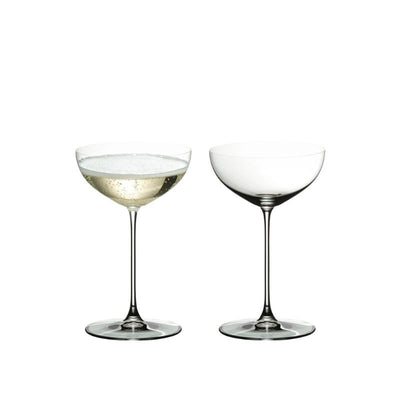
🍾 Glass Shape Matters: Tall, narrow flutes look elegant but hide most of the wine's flavour. Wider, egg-shaped glasses allow the wine to breathe whilst maintaining bubbles, letting you actually taste the complexity. Proper Champagne glasses make a genuine difference to the experience.
Why Sparkling Wine Works With Food
Sparkling wine is one of the most food-friendly wine styles, for several reasons:
High acidity cuts through rich, fatty, creamy food. It cleanses your palate between bites, preventing that overwhelmed, coated-mouth feeling you get from eating rich food with low-acid wine.
Bubbles provide texture that still wine can't match. They create a scrubbing, refreshing sensation that works particularly well with fried food, salty snacks, and dishes with cream or butter.
Versatility – sparkling wine handles both salty and sweet elements without clashing. This makes it brilliant for complex dishes where you're dealing with multiple flavours at once (hence why it works so well with Christmas dinner).
Temperature – sparkling wine is served cold, which is refreshing with food and helps balance richness.
Classic Pairings
Oysters and Champagne – the classic pairing. The minerality and acidity of good Champagne complements the briny, mineral character of oysters perfectly.
Fried food and anything sparkling – the bubbles and acidity cut through the grease brilliantly. Fish and chips with English sparkling wine is genuinely excellent.
Salty snacks (crisps, salted nuts, olives) with dry sparkling wine – the salt emphasises the wine's fruit, and the bubbles refresh your palate.
Soft cheeses (Brie, Camembert) with Champagne or quality Cava – the acidity handles the creaminess beautifully.
Asian food with off-dry sparkling wine – the slight sweetness balances chilli heat and strong flavours like ginger and lemongrass.
"There comes a time in every woman's life when the only thing that helps is a glass of champagne."
— Bette Davis
The Truth About Sparkling Wine
Sparkling wine isn't just for celebrations. It's brilliant with food, works in situations where still wine struggles, and there's a huge range of styles and prices to explore.
Champagne is wonderful, but it's not the only option. Good Cava offers incredible value. English sparkling wine is genuinely world-class. Prosecco is perfect for easy-drinking occasions. And there's a whole world of regional sparklers – German Sekt, French Crémant, Italian Lambrusco, Australian Shiraz – that are worth exploring.
Don't save sparkling wine for special occasions. It's too good to drink only a few times a year. Open a bottle on a Tuesday. Have it with fish and chips. Drink it with Sunday roast. Use it for everyday celebrations, not just the big ones.
And if you're not sure what to try, talk to your local wine merchant. They'll point you towards interesting bottles you've never heard of, and that's half the fun of wine – discovering something new that actually tastes good.
Serve Your Sparkling Wine Properly
The right glass genuinely enhances sparkling wine. Egg-shaped glasses show flavour and complexity far better than traditional flutes.
Shop Champagne GlassesFrequently Asked Questions


Leave a comment